
Kaumana Caves vs. Thurston Lava Tube – Which One is Better?
This is a showdown post: Kaumana Caves vs Thurston Lava Tube. Which one is better? Should you visit one or both?
Hiking through lava tubes was a favorite past time when I lived on the Big Island. They are so mysterious, eerie, and cool!
I’ve visited Kaumana Cave and Thurston Lava Tube many-a-time so wanted to do a comparison for you.
In this post I will answer:
- Is the experience the same between the two
- What makes them different from each other
- Are they worth visiting
Kaumana Caves vs. Thurston Lava Comparison
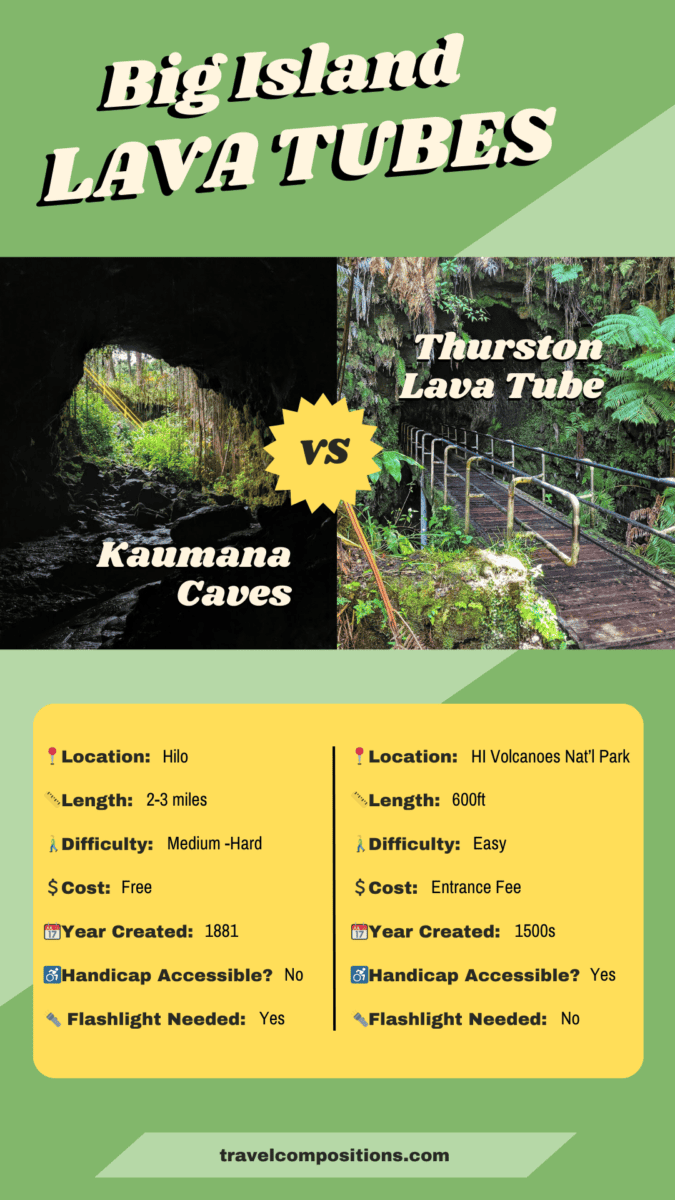
Here’s a quick side by side look comparing Kaumana Cave (KC) and Thurston Lava Tube (TLT)
📍 Location
KC: Hilo
TLT: Hawaii Volcanoes National Park
📏 Lava Tube Length
KC: 2-3 miles (hikeable)
TLT: 600ft
🚶♂️ Hiking Difficulty
KC: Medium-Difficult
TLT: Easy
💲 Entrance Fee
KC: No
TLT: Yes
♿ Wheelchair/Stroller Accessible
KC: No
TLT: Yes
🔦 Flashlight Needed
KC: Yes
TLT: No

Differences
Location and Accessibility
- Kaumana Caves are located in Hilo, with free parking. The entrance is also free. This site requires more physical agility due to its natural and rugged terrain.
- Thurston Lava Tube is in Hawaii Volcanoes National Park, with tricky parking and an entrance fee required as part of the park entry. The trail is more accessible, featuring a paved path and minimal topography change.
Experience
- Kaumana Caves involves climbing, crouching, in a more rugged environment. It’s a more physically demanding experience requiring sturdy shoes, long pants, and a strong flashlight. You probably won’t see many people, if any.
- Thurston Lava Tube offers a gentler experience with a looped, paved trail, a short walk through a softly lit cave, and easier, flat hiking conditions. Requires a flashlight during off-hours. Expect it to be pretty busy with visitors, especially late morning/early afternoon.
Cave Features
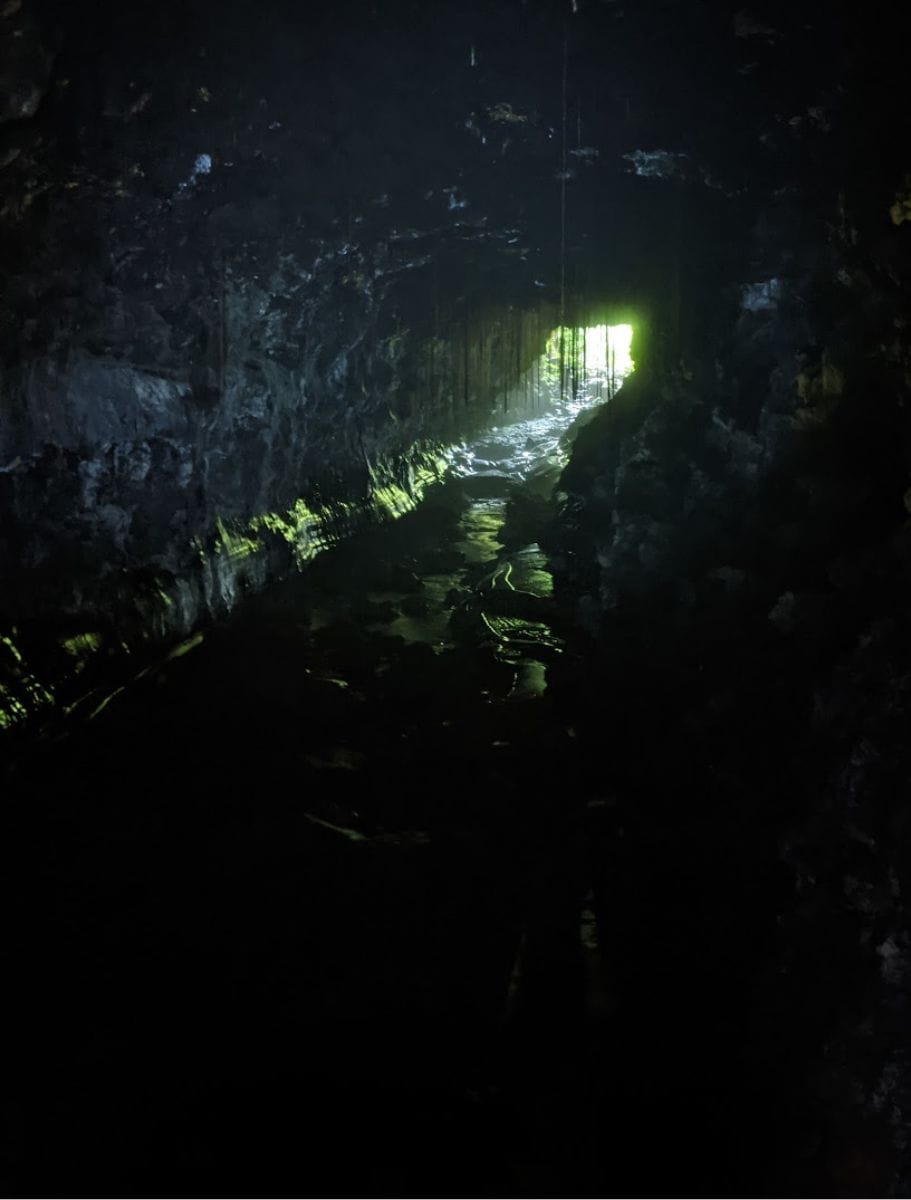
- Kaumana Caves have parts where the ceiling height varies significantly, and the exploration can involve boulder hopping. Relatively dry inside.
- Thurston Lava Tube features an flat path with standing room the entire length. Puddles are pretty much a constant.
Similarities
Volcanic Origin
- Both are lava tubes created by volcanic eruptions, with Kaumana Caves formed by an eruption from Mauna Loa in 1881, and Thurston Lava Tube formed sometime in the 1500s.
Exploration Experience
- Both offer unique underground exploration opportunities, allowing visitors to experience the interior of lava tubes firsthand, though the nature of the exploration differs.
Natural Features
- Each provides a glimpse into the geological processes of lava creating a natural cave.
Visitor Amenities
- Both have public restrooms and places to rest.
Kaumana Cave caters to those seeking a more adventurous, physically challenging cave experience, requiring more preparation and caution.
In contrast, Thurston Lava Tube offers a more accessible, easy experience, suitable for a wider range of visitors, including those who prefer less physically demanding activities.
Both are definitely worth visiting!
💫 My Favorite: Between the two lava tubes, I’m going to say that Kaumana Cave is my favorite because it is more raw and not as “manicured” as Thurston Lava Tube. Plus, whenever I go, there’s hardly anybody there.
Now let’s look into the nitty gritty details of each lava tube to see how they differ and compare.
Kaumana Caves
Fast Facts
- Location: Hilo
- Length: 2-3 miles are hikeable but the entire lava tube length is about 25 miles
- Eruption Created: Mauna Loa in 1881
What to Expect When Visiting
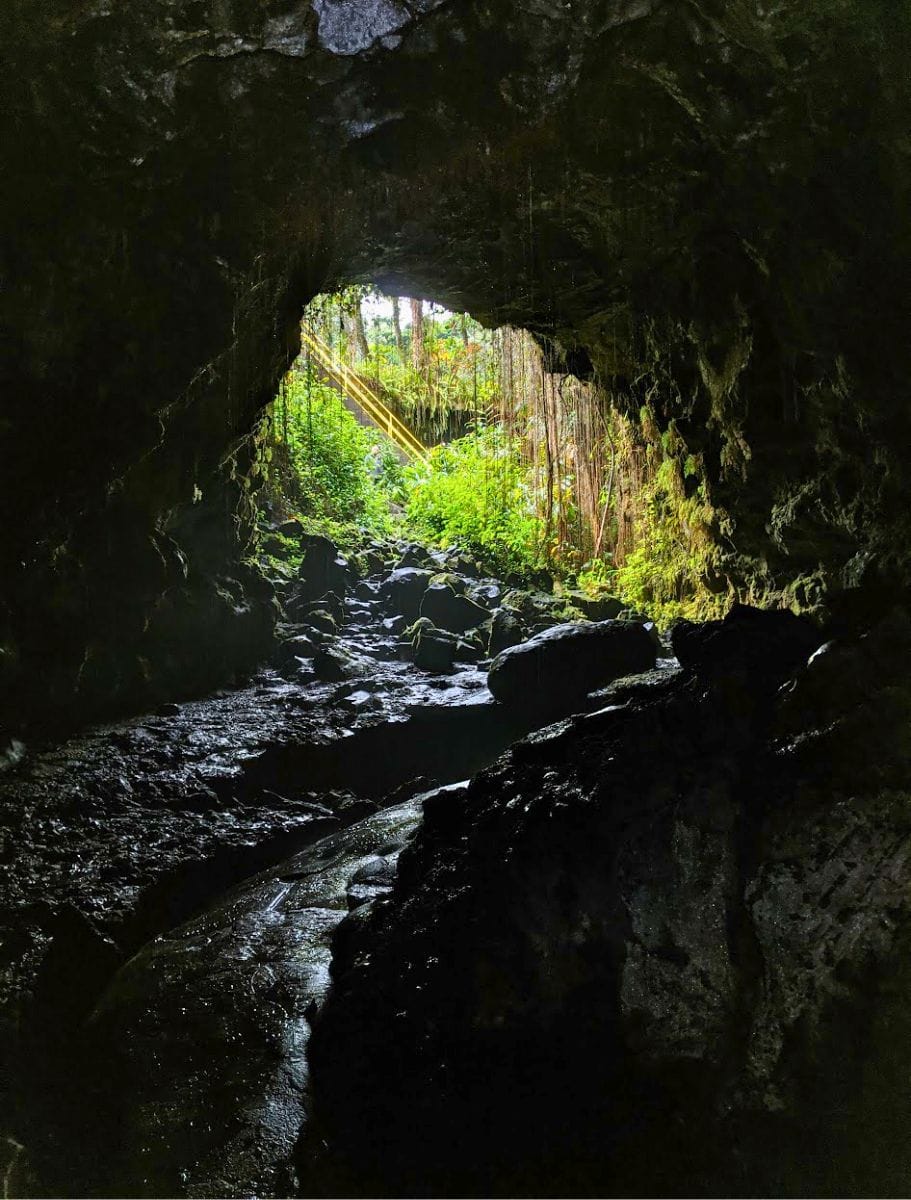
The stairs leading down to the caves is very steep, almost ladder like.

When you get to the bottom, there’s the choice to go left or right.

The main cave is to the right, with the big mouth opening into the lava tube.
You can climb in a few feet without using a flashlight, but it won’t take long before it gets too dark to see the path and boulders, so if you didn’t bring a flashlight you’re SOL. And no, you’re cellphone flashlight won’t be bright enough in here.
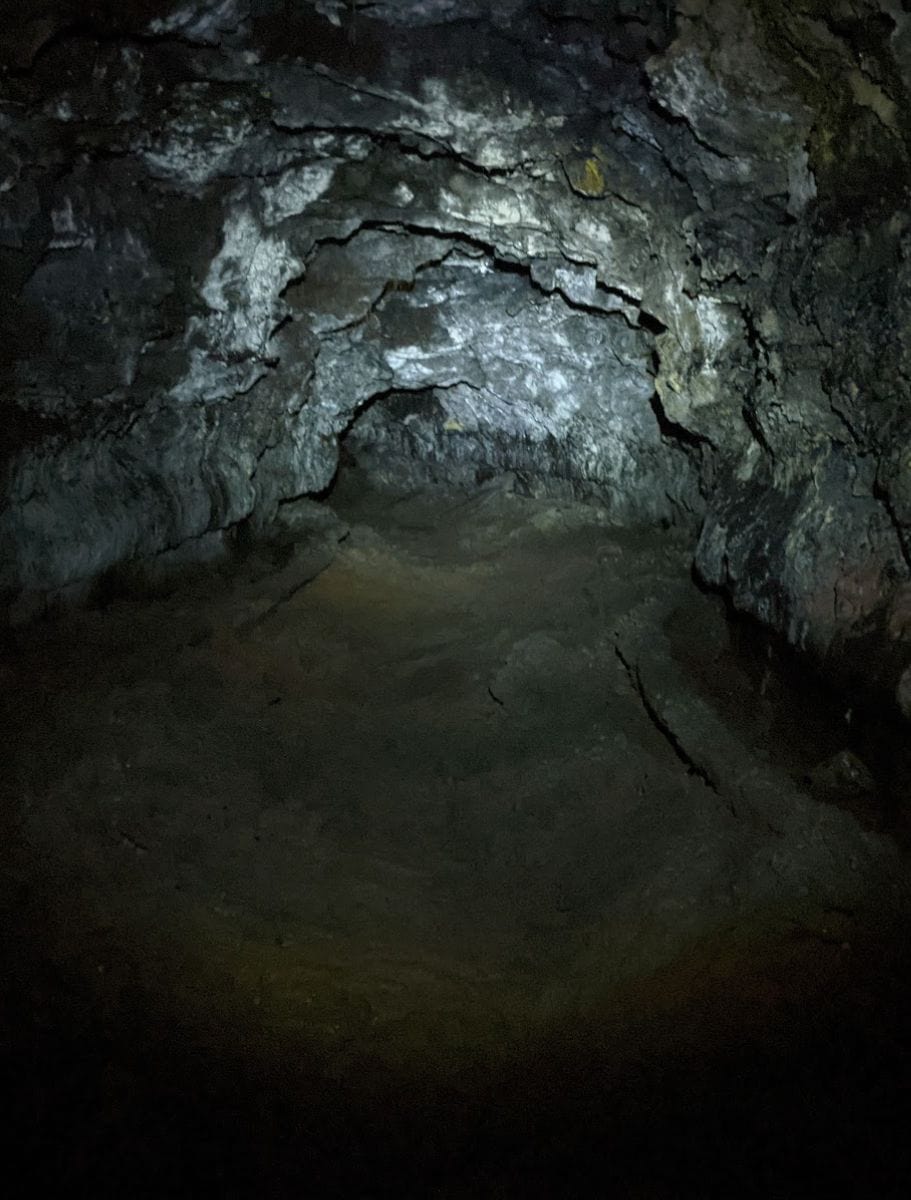
The cave ceiling height can range from 30 feet tall to as low as 3 feet, which is where the crouching and climbing comes in.
The hikeable length on this side of the lava tube is about 2 miles. Technically the total length of the lava tube is about 25 miles, but it’s unclear to me whether it’s obstructed at the end or goes through private properties.

I came to a point, probably a 1/4 mile or so in where I was too uncomfortable for my safety to climb down into a pit and continue through. But that was okay as I was ready to turn around at that point anyways.
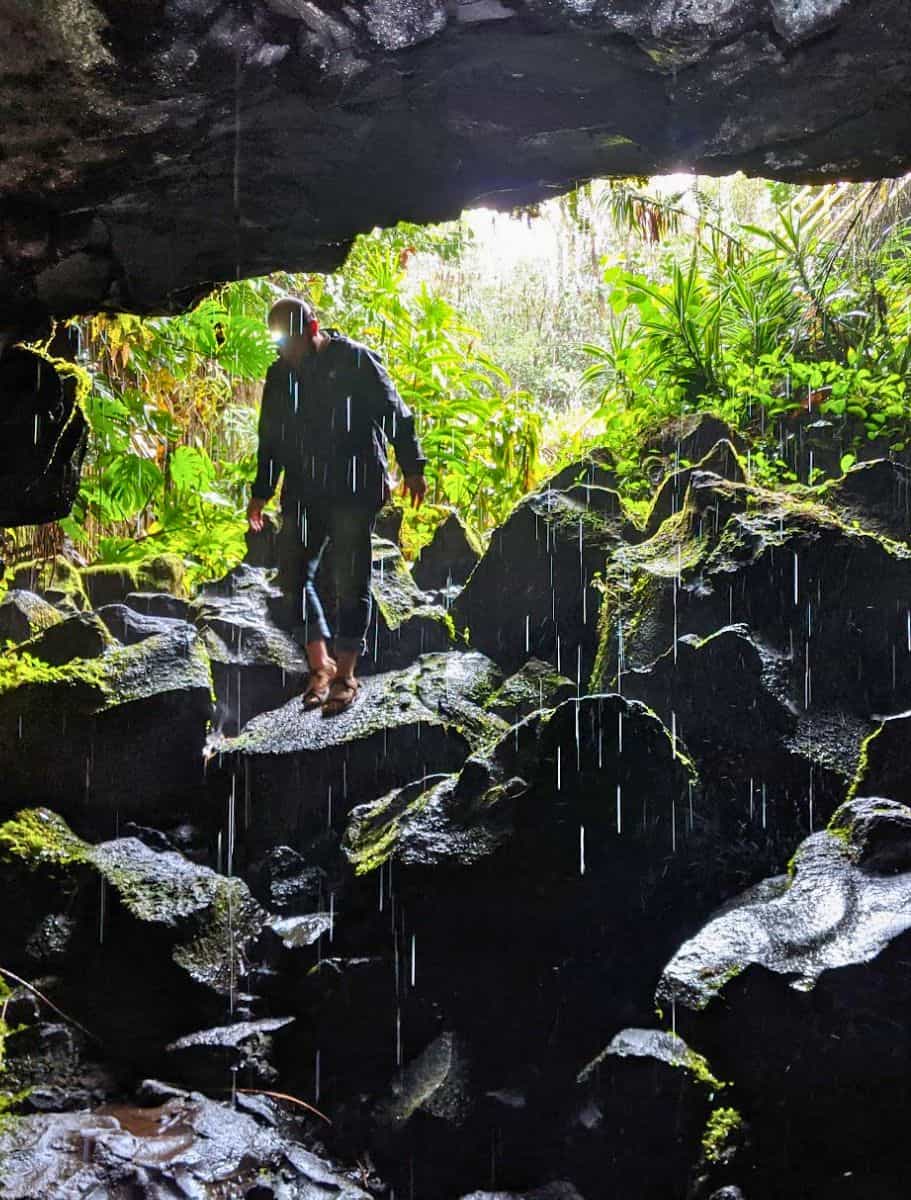
The cave to the left begins with a lot more climbing and crouching at the beginning. And be careful, the first time I tried hiking through it was during a rain storm and there was a river of water flowing down the tube (so obviously I didn’t continue hiking through).

Again, I reached a point 10-15 minutes in where I was too uncomfortable to keep climbing through and turned around.
Visitor Tips
What to Bring
Flashlight/Headlamp – you are not going to get far in the caves without light and your cellphone flashlight is not gonna cut it. Headlamps are best to stay hands free.
Sturdy/Close-Toed Shoes – There is a lot of boulder hoping and various rocks you’ll be climbing over; keep those piggies safe!
Long Pants – depending how deep you go and how much climbing you want to do, you’ll need long pants as you’re kneeling or scooting across lava rocks
Courage – if you’re prone to claustrophobia, this is a good place to practice overcoming it
Fees & Parking
Parking: Parking for Kaumana Caves is free and in a pullout directly across the street on Kaumana Dr just 4.5 miles up from downtown Hilo. I am often greeted by chickens when I park.
Entrance fee? No. Entrance to Kaumana Cave is free.
Restrooms? Yes.
Best time to visit? Anytime
Kaumana Cave Highlights
- Very rocky, boulder hopping, some crawling – actual spelunking
- Two directions to explore caves
- Lava tube has no electrical lighting
- NOT wheelchair and stroller accessible
- Entrance fee is free
- Does not get too busy with visitors
Thurston Lava Tube (Nāhuku)

Fast Facts
- Location: Hawaii Volcanoes National Park
- Length: 600 ft ; but trail total is about 0.5-miles
- Eruption Created: sometime in the 1500s
What to Expect When Visiting
The Thurston Lave Tube trail is a loop. Technically you can go left or right, though heading right is the designated direction. I even prefer going this way.
The trail leads you on a gently winding paved path that descends and then ascends through a lush, tropical forested pit crater, surrounded by towering giant ferns.

After a short walk, you come to the Thurston Lava Tube entrance where a wooden bridge crosses over a pit and leads directly into the cave’s heart.

The interior path, now a dirt trail, is softly lit by dim orange lights, creating an ambiance similar to walking in the queue for the Indiana Jones ride at Disneyland.
Watch your step as there are puddles everywhere and can be hard to see in the low light!
But you won’t have to worry about hitting your head on the cave ceiling as it gets as tall as 20 feet in some areas.
Sadly, the walk through the cave is relatively short, ending soon after it began.
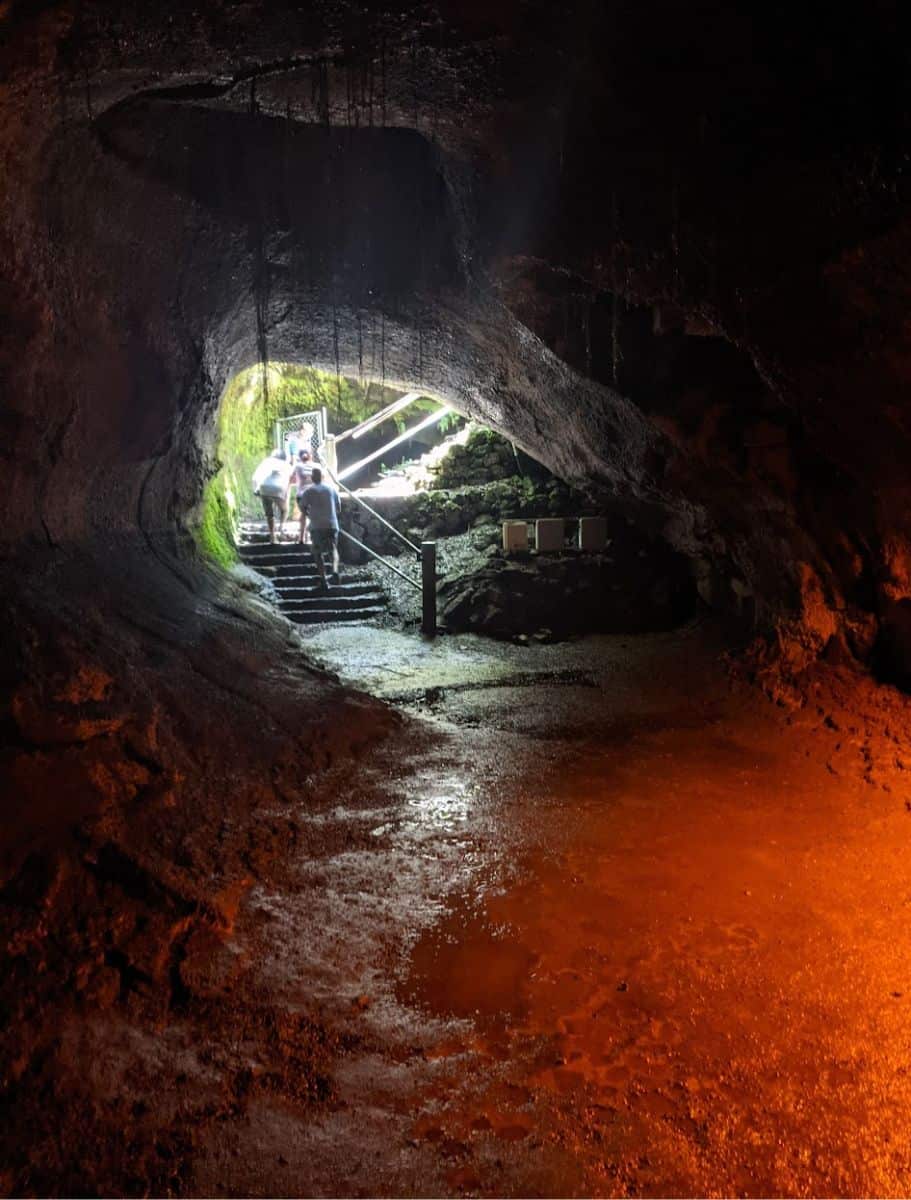
A staircase at the end of the tunnel leads up to the paved trail above where you finish the paved loop path until you reach the trailhead.
Visitor Tips
What to Bring
Walking Shoes – this is an easy mostly paved hike, just know that there are always puddles inside the cave
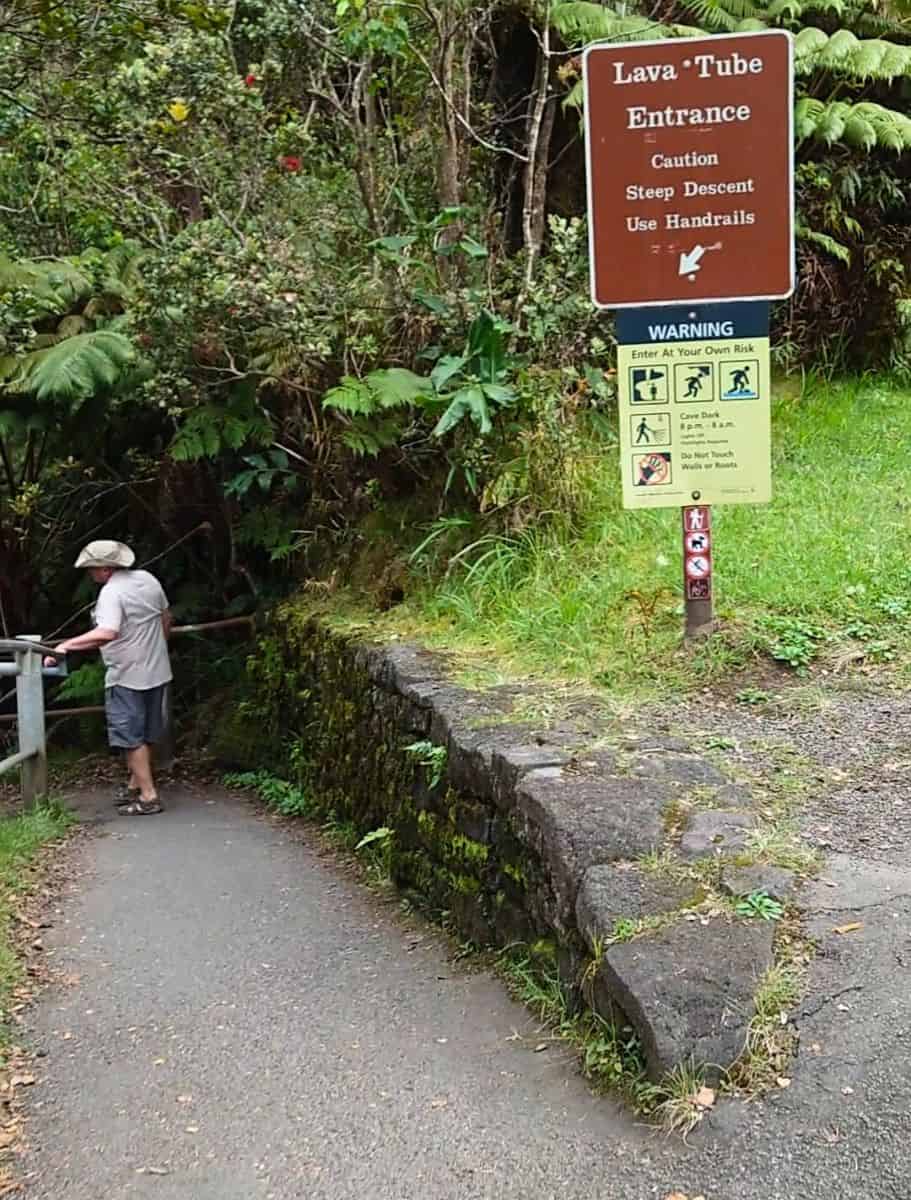
Flashlight/Headlamp – if you are hiking between 8pm-8am the lights are not on inside the cave so you will need some sort of light; it’s also not a bad idea to bring if you have bad eyesight
>> Order a Headlamp Here! <<
Fees & Parking
Parking: Parking for Thurston Lava Tube can be tricky. I prefer to park at the trailhead and usually luck out, but if there are no spots you’ll have a heck of time turning and looping around.
Alternatively you can park at Kilauea Iki Trail lot, but that tacks on an extra mile of hiking.
Entrance Fee? Yes. The entrance fee to Thurston Lava Tubes is included when you pay for your Hawaii Volcanoes National Park entry at the gate.
Restrooms? Yes.
Best time to visit? Early morning or late afternoon to beat the crowds.
Highlights
- Paved trail with minimal topography change
- Lava tube illuminated by orange lights
- Wheelchair and stroller accessible minus the stairs on one end
- Entrance fee to Hawaii Volcanoes National Park required
- Can get pretty busy with visitors
You Might Also Like:
How to Explore Thurston Lava Tube
What is a Lava Tube?
A lava tube is a natural conduit formed by flowing lava from a volcanic eruption that moves beneath the hardened surface of a lava flow. When lava flows, the outer layers of the lava stream cool and solidify first due to contact with the air or cooler surfaces, while the inner part of the flow can continue to move as liquid lava.
Over time, if the molten lava from the interior flows out, it leaves behind a hollow tunnel-like structure.
Lava Tube vs Cave
So what’s the difference between a lava tube and a cave you ask?
While both lava tubes and caves are underground passages, their formation, material composition, and features vary significantly.
Formation
Lava tubes are formed from flowing lava during volcanic eruptions
Caves, on the other hand, are formed through a variety of processes, often involving the dissolution of rock by water, erosion, or the physical force of moving water.
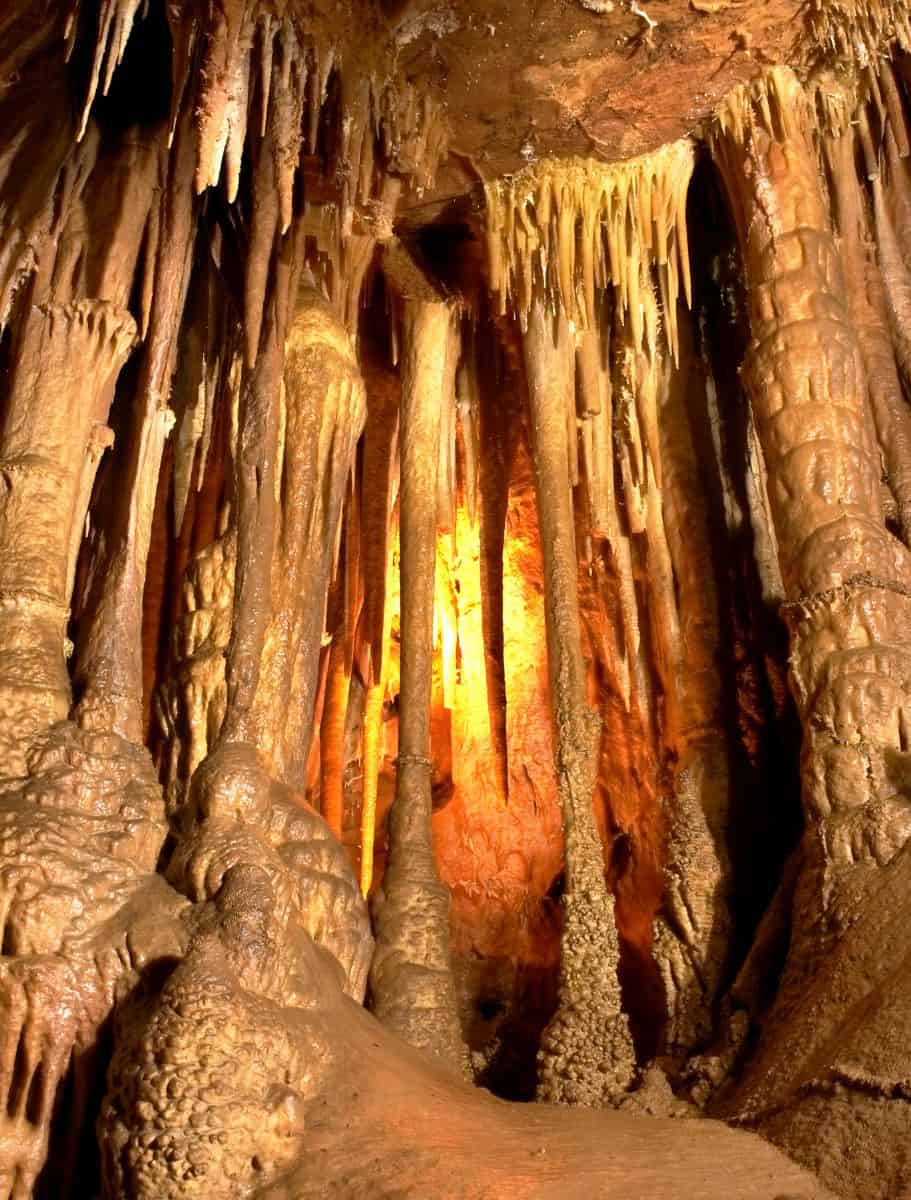
Limestone caves formed by dissolution are the most common type, but caves can also form in ice, sandstone, and other materials.
Internal Features
Lava Tubes often contain features unique to their volcanic origin, such as smooth walls or lava rock boulders that have fallen from the ceiling.
Caves contain contain a wide range of formations such as stalactites, stalagmites, columns, and flowstone, formed by mineral deposits from water percolating through the earth.
Also, because lava tubes are porous, they absorb sound and are not echo-y like caves.
You Might Also Like:
• Hawaii Volcanoes National Park Self Guided Tour
• Discover Big Island Petroglyphs
Which is Better? Kaumana Caves or Thurston Lava Tube?
To be cliche in my answer, both Kaumana Caves and Thurston Lava Tube are definitely worth visiting.
If you’re visiting Hawaii Volcanoes National Park, Thurston Lava Tube is going to be one of your main stops anyways, so there’s no reason not to see it.
However, if I had to choose just one, I would definitely pick Kaumana Caves. It’s a more rugged experience and there are never any crowds.
🌺 Big Island Travel Planning Guide 🌺
🚨 Should I buy Hawaii travel insurance?
YES — I recommend Travel Insurance Master because you can compare multiple options with one click. With plans starting at $5/day per person, why not give yourself piece of mind? Better to have it and not need it than need it and not have it!
🚗 Is it safe to rent a car on the Big Island?
YES — It’s totally safe to drive on the Big Island. And unless you plan to chill by the resort pool the entire time, renting a car is pretty much a necessity on the Big Island! Jeep rentals are popular. I recommend Discount Hawaii Car Rental, as they have some of the best prices around.
📞 Will my phone work on the Big Island?
PROBABLY — Most, if not all, cell providers work on the Big Island. However, be prepared for some dead spots in the more remote parts of the island. For example, I always lose service driving through Hawaii Volcanoes National Park.
🛏️ What’s the best way to book my Big Island accommodations?
For Big Island hotels, Booking.com is amazing because you can often reserve your room with no money down. If you are looking for an Airbnb condo with a kitchen and more space, don’t forget to check VRBO for potentially better prices and options.
✈️ What’s the best site to buy Big Island flights?
I recommend looking at Skyscanner for finding cheap flights. Pro Tip: check if flying into Hilo is cheaper than flying into Kona.
🛂 Do I need a passport to visit Hawaii?
NO — If you are a US citizen, you do not need a passport as Hawaii is part of the United States. If you are from out of the country, the same passport and visa requirements are the same as entering anywhere in the United States from your country.
🧳What should I pack to the Big Island?
Pack for tropical weather but also prepare for colder than expected nights and early mornings, so a light sweatshirt is recommended. Check out this list of 5 Things Not to Forget to Pack.


