
How to Spend 2 Epic Days in Hawaii Volcanoes National Park

This Hawaii Volcanoes National Park 2 day itinerary will have you exploring corners of the park that most visitors don’t have time to see.
It’s one of my favorite places to explore on the island as there is so much to see and different trails to hike, like petroglyphs, giant fissures, wine tasting, finding endangered plants, and witness flowing lava from afar (if the volcano is currently active).
So let’s get started! But first:
Shaka Guide
Maximize your learning and appreciation of Hawaii Volcanoes National Park with the Shaka Guide!
I love this app!
Using GPS, it guides you around the park, informing you about what you’re seeing along the way!

My Go-To Big Island Travel Planning Resources
🚗 The best car rental prices I’ve found are from Discount Hawaii Car Rental!
🪂 Have an activity on your Bucket List? Book a tour with Viator!
🧳I never pack my bag without these!
Hawaii Volcanoes National Park Day 1
Arrival at Hawaii Volcanoes National Park
$30 entrance fee per vehicle to Hawaii Volcanoes National Park is good for 7 consecutive days. Purchase at the gate or online.
Arriving early to Hawaii Volcanoes National Park is best, not only to fit in as much exploration as possible but to also get ahead of the crowds, especially those in tour buses. The park is open 24/7 so you can go as early as you want.
Make your first stop at the Kilauea Visitor Center, a hub of information and knowledge. Here, friendly park rangers await to guide and assist you, providing valuable insights about the park’s geology, history, and safety guidelines. Immerse yourself in the exhibits and interactive displays, learning about the volcanic processes that have shaped this unique landscape.
Pop over to the Volcano Art Center Gallery, in the historic original Volcano House, to shop for one-of-kind souvenirs and support the vibrant, Hawaiian artistic community.
Take a short hike to the Sulphur Banks Trail, seeing and smelling the yellowish wall of pungent steam and gas.
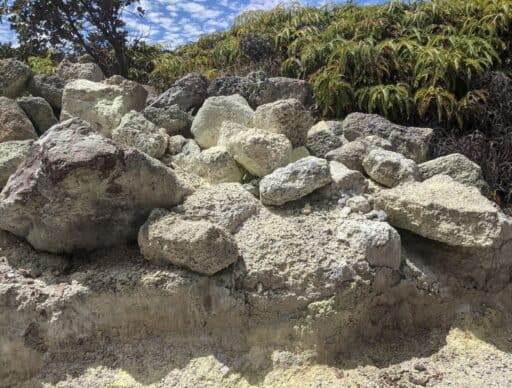
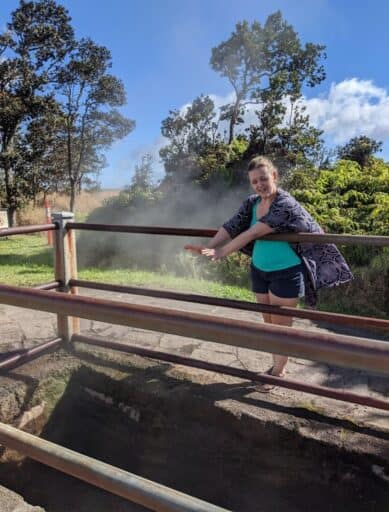
Steam Vents
Drive to the Steam Vents to witness clouds of steam rising from the ground. This is caused by rain water seeping down into the earth, getting heated up by the volcanic activity below, and evaporating into steam escaping from various crevasses. After a good rain the steam is even more excessive.
There is also a good overlook, offering your first glimpse into the crater. Notice steam seeping out from the cliff sides as well.
Kilauea Overlook
If Kilauea is erupting, check here for current conditions, this could be your first opportunity to see lava. It is surprisingly hard to see the red hot lava during the day, but it’s still fascinating.
If the volcano is not currently active, skip this stop and head straight for the Jagger Museum.
Crater Overlook by Jagger Museum
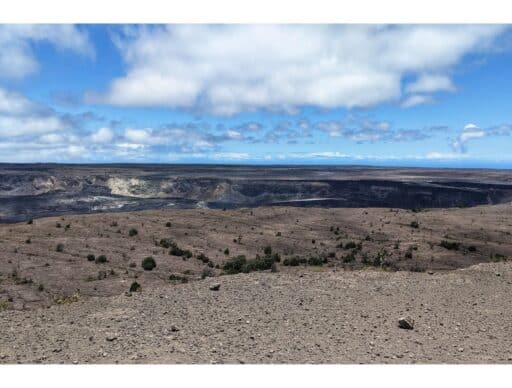
While the Jagger Museum is closed due to structural dangers after the 2018 eruption, the overlook adjacent to it is open and offers the best overall viewpoint of the expansive crater.
This is the best sense you’ll get of how big Kilauea Crater actually is.
Kilauea Iki Crater Overlook
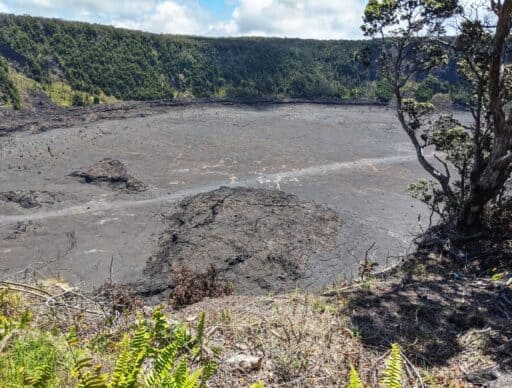
A lot of itineraries have you stop for the Kilauea Iki Crater Overlook. This is often a busy and full parking lot with surprisingly no real place to overlook the crater. You’ll find openings between trees along the path, but no viewing deck or area.
If you’re inclined, the Kilauea Iki Trail is a 4-mile loop that brings you down to the crater floor.
Otherwise, you can park here and take the nice forested trail along the crater rim over to the Thurston Lava Tube trailhead. OR, bypass this stop and park closer to Thurston in one of the parking spots along the road closer to the trail.
Thurston Lava Tube
A must stop when exploring Hawaii Volcanoes National Park, Thurston Lava Tube is an easy, half mile loop that brings you through a lava tube.
The trail is paved the whole way, except when you are in the tube. Once inside the cave, orange lights dimly illuminate the path, allowing you to experience the grandeur of this rock formation as purely and safely as possible.
Beware of puddles hiding in the shadows lol!
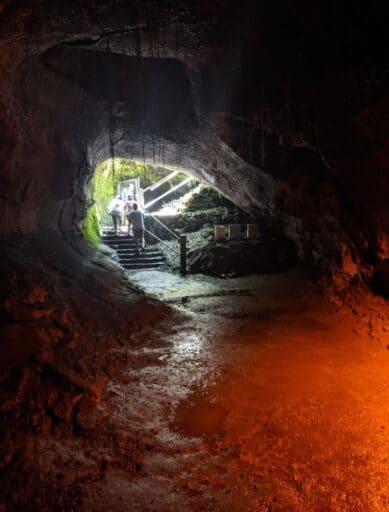
This trail is also good for birdwatching. If you stand still for just a few minutes, you’ll begin to hear the calls of the various species and see the colorful winged creatures flit from tree to tree.
Chain of Craters Road
Follow the guidance of the park map and/or the Shaka Guide app as you drive Chain of Craters Road, making quick stops to observe the various craters along the way.
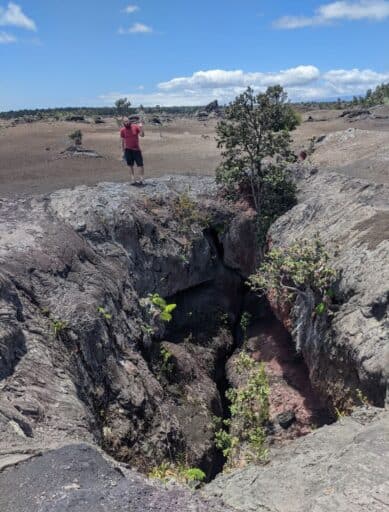
My favorite stop on this road is a “secret” crater not marked on the national park map. Find out where it is here!
My other favorite stop on this part of the journey an eruption field. Mauna Ulu is a short loop trail observing formations, multicolored lava rocks, and deep crevasses from the 1969 eruption. Theres a section here where the rocks look like carnival glass, shiny and colorful.
Kealakomo is a good pullout with picnic tables to have a packed lunch, as there aren’t any restaurants this far into the park.
Pu’u Loa Petroglyphs
Make your way closer to sealevel with expansive lava fields and ocean views.
Near the end of Chain of Craters Road is the pullout for the Pu’u Loa Petroglyphs trailhead. If the timing is right, try to time your hike for late afternoon/early evening, when the sun is lower in the sky thus allowing the petroglyphs to cast their shadows for easier viewing (and it’s not so hot out!).

This flat hike across an uneven lava field ends at a boardwalk in the middle of nowhere but lets you observe these ancient mysterious carvings without damaging them. You’ll notice that there are thousands of them, most with unknown meanings.
Holei Sea Arch
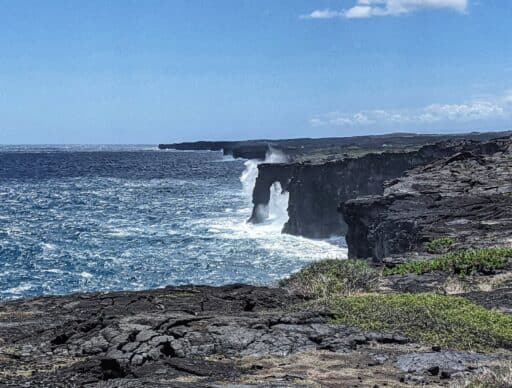
The last point of interest on Chain of Craters Road is Holei Sea Arch. Eventually this arch will be worn away by the ocean, so see it while you can; although, this site was a dud for me as the arch is further away than pictures make it seem to be and is a bit underwhelming.
Volcano Thursday Market
If you are visiting on a Thursday, check out the Volcano Thursday Market at the Cooper Center in Volcano Village.
The market is open from 3pm-6pm and has over 30 vendors selling locally made goods.
Dinner at Volcano House
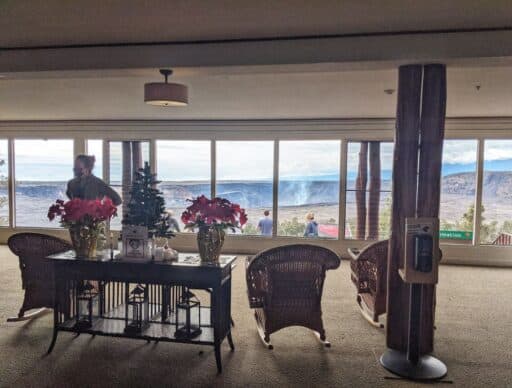
To complete your day in Hawaii Volcanoes National Park, try reserving a dinner table at Volcano House.
The dining room overlooks Kilauea Caldera. On days when it’s active you can either see the orange glow of the lava and/or see the lava itself as you dine.
Reservations fill fast, so book as soon as you know your date.
Bowling in Military Camp
If you still have some energy left in you, challenge a friend or family member to some bowling.
While staying in Kilauea Military Camp is for military families only, civilians are allowed to use the amenities on property.

There is a 6-lane bowling alley as well as an arcade and game room, sure to keep you entertained until bedtime.
Sleep at Volcano House
I recommend staying at Volcano House. Just like the restaurant, this historic hotel also offers rooms overlooking Kilauea Caldera. Where else will you sleep with lava as your nightlight?
If it’s unavailable, or not your jam, there are plenty of other options in Volcano Village for boutique hotels or B&Bs.
🛏️ Find a place to stay near Hawaii Volcanoes National Park here!
Hawaii Volcanoes National Park Day 2
Sunrise Hike to Lava
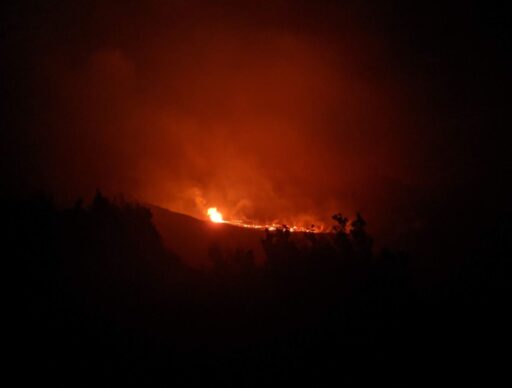
If lava is flowing in Kilauea, viewers will flock to the Halema’uma’u Overlook between 6pm-9pm. Avoid the crowds and see it in the quiet before sunrise. Bring a flashlight, and go night hiking.
Park at the Devastation Trail parking lot but hike the Old Crater Rim Road. This used to be drivable prior to the 2018 eruption. Now it’s just a nice paved 1mile path to get access Halema’uma’u Overlook.
A sandwich board will point you to the right where the path goes off road in gravel for a few hundred feet which leads to the viewpoint.
This is one of the best, uninhibited views you will get of the lava (if it’s flowing). If you saw the lava on the opposite side of the crater yesterday in the daylight, you will see a stark contrast in the glowing brilliance.
Enjoy soaking in this once-in-a-lifetime opportunity watching new earth being formed right before your eyes. Slowly the sun will rise, waking the birds, and give you a lighted way back.
Even if there isn’t any lava flowing, this is a lovely stroll to enjoy more of the park and still see Kilauea Crater from a different angle.
Breakfast at Volcano House
Back at Volcano House Restaurant, fuel your body for the adventures of the day by indulging in an endless breakfast buffet of tropical fruits, waffles, eggs, and more.
Mauna Loa Rd Drive
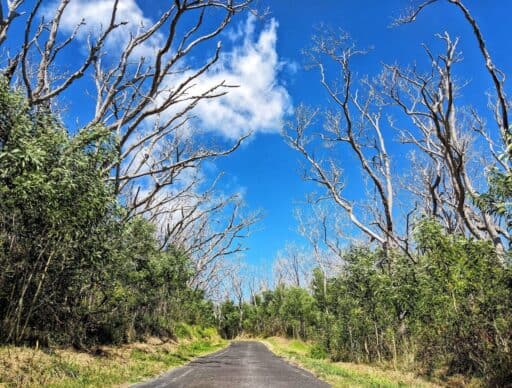
Head out to explore an underrated corner of Hawaii Volcanoes National Park driving Mauna Loa Rd. This part is outside the main park, a little bit south, but still part of the national park.
Stop to view some large lava tree molds: a hollow cavity created when lava flows encase and solidify around a living tree, not burning it, so when the tree rots away, a tree imprint made of volcanic rock is left behind.
A one mile loop on Kipukapuaulu Trail takes you through a forested path, good for birding but no view. Keep your eye out for a hidden lava tube.
Driving up Mauna Loa Road you’ll pass by dead, white koa trees that were burnt in a wildfire, but now give off a Suessical forest vibe.
At the end of the road, up about 6,660ft, the Mauna Loa Lookout has a rock pavilion built in 1937 that looks down on Hawaii Volcanoes National Park below. You’ll be able to see Kilauea steaming from the earth, and on a clear day, all the way to the ocean.
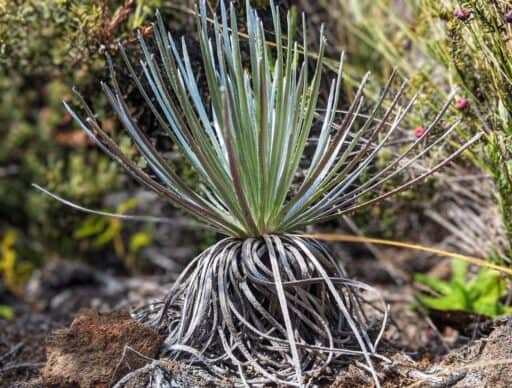
A short path leads you to the endangered Mauna Loa silversword plants that are growing and protected and being studied. You won’t find these anywhere else on the island unless you plan to hike up higher on Mauna Loa.
Volcano Winery

Wind down after exploring Mauna Loa Rd by sampling some Hawaiian wine. Volcano Winery has their own estate growing grapes. Try 6, 1oz pours of their various wines and try identifying the different tropical fruits incorporated.
They also grow their own tea and have a separate, estate tea sampling.
Shopping in Volcano Village
Volcano Garden Arts is a quaint gift shop filled with Hawaiian fine arts and crafts. It’s got a quiet garden in front, great for getting your zen on.
If you are visiting on a Sunday, check out the farmers market. You’ll get to meet local vendors selling fresh produce, handmade gifts, and selling various knickknacks.
Lunch at Kilauea Lodge
Have a sit down lunch with local ingredients coming from all over the Big Island, which theylist on their menu. Enjoy the peaceful grounds and gazebo outside.
Hike Halema’uma’u Trail
Work off your lunch by heading back into the main park and hiking down to the crater floor inside Kilauea Caldera. Park at Volcano House and either take the shorter, out-and-back Halema’uma’u Trail or continue on and take Crater Rim Trail for an extended loop.
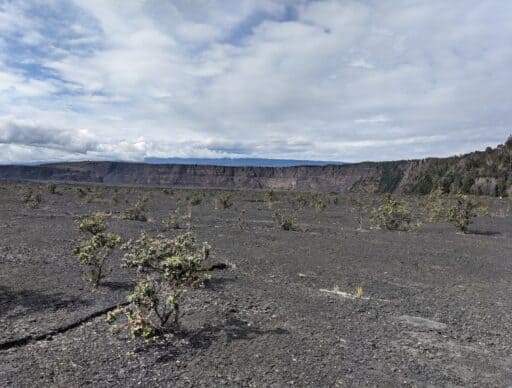
This hike completes the well-rounded views of Kilauea, from the cliff edges from various points around the rim, from above at the Mauna Loa lookout, and now finally at ground zero on the crater floor.
End of Hawaii Volcanoes National Park 2 Day Itinerary
Thus concludes your 2 day itinerary around Hawaii Volcanoes National Park. If you still have energy in you, check out the park map for other trails that peek your interest, or revisiting sites from yesterday.
Assuming you will be heading to either Kona or Hilo, you’ll be in town in time to find dinner and check into your next hotel.
You could also make the trek to Isaac Hale Park. There you will see the newest black sand beach created by the 2018 eruption.
FAQs
How long do you need at Hawaii Volcanoes National Park?
How long you need at Hawaii Volcanoes National Park depends on how much you want to see. Some people stay for a mere couple of hours while others can spend a whole week hiking and camping on the various trails.
A well-rounded day trip to the park will need about 6hrs.
How long does it take to drive Crater Rim Drive?
Crater Rim Drive cannot be circumnavigated, but is a 6 mile arch. The park entrance is about dead center as the road goes about 3 miles to the right to Uēkahuna Overlook, and about 3 miles to the left to Devastation Trail.
All in all, it takes about 15min to drive from one point the other point.
What time is best to see lava at Volcano National Park?
The best time to see lava is between 10pm-9am, when the crowds are no longer clogging up the road and viewing. Ideally, show up right before sunrise to see the lava in both the darkness of night and in the daylight without hoards of tourists.
Read more on Hawaii Volcanoes National Park:
Self-guided Tour of Hawaii Volcanoes National Park in One Day
Mauna Loa Scenic Drive
The Kahuku Unit
Epilogue: Hawaii Volcanoes National Park Itinerary for 2 Days
By following this Hawaii Volcanoes National Park 2 day itinerary you’ll enjoy the diverse range of activities and sights to explore. From hiking along the volcanic craters, warming yourself by steam vents, witnessing the birth of new terrain, or exploring ancient cultural sites, there is an abundance of captivating experiences to be had.
Most visitors only scratch the surface, spending a mere few hours exploring its wonders. However, it becomes clear that this extraordinary destination is deserving of more than just a fleeting visit.


