
Guide to Kona Diving: Best Scuba Diving Big Island Hawaii

Looking for the best places for Kona diving? I got you!
Are you dreaming of rainbows, sunsets and Mai Tai’s on the beach? Along with getting lei’d, these are common occurrences in Hawaii, but so few people get a quality opportunity to see the other realm of the Big Island’s beauty: Kona diving.
The vistas beneath the sea can be as impressive and just as magical if not more special than those on land.

What Kind of Diving is Available in Kona?
Kona is well known for two of its world famous dives: manta ray night dive and Black Water dive.
Manta Ray Night Dive
The manta ray night dive is Kona’s most popular drawing divers from around the world to watch as giant manta rays swim in a fantastic underwater ballet swooping and flipping underwater to feed feet from diver’s faces. There’s really nothing else like it in the world and it produces some pretty elated divers when they come out of the water having seen a 1200 pound ray inches from their face.
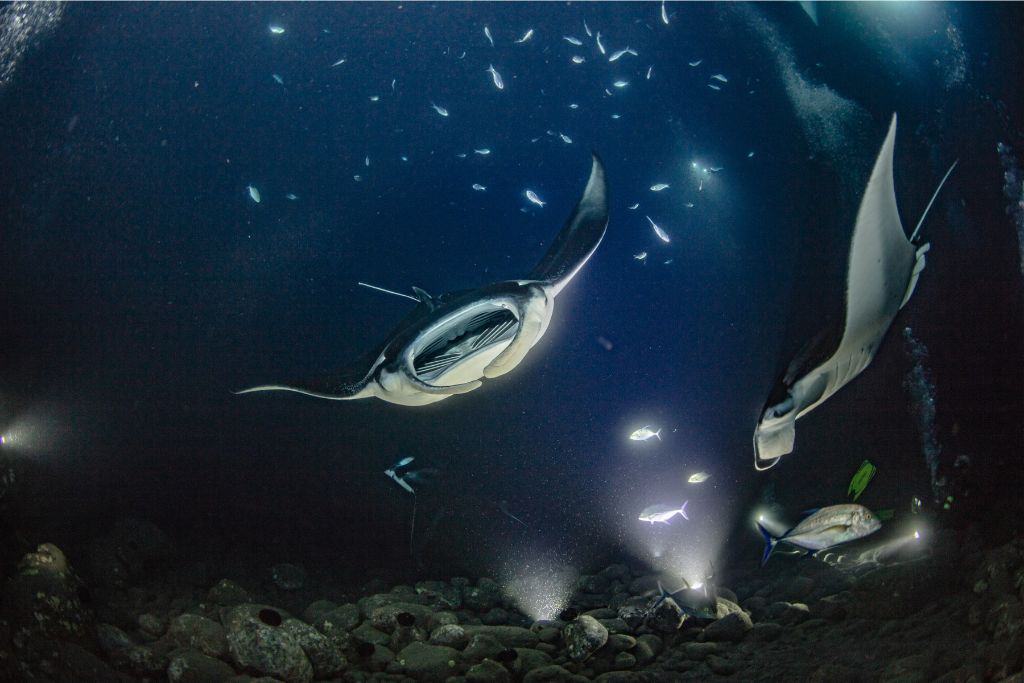
Sit on the ocean floor in a circle around a “campfire” of blue lights that attract plankton and watch the manta rays feed off of them above your head.
>>🤿 Book a Manta Ray Night Dive Here with Kona Honu Divers Here! <<
Author’s Note: Some companies offer a combo diving and snorkeling with the manta rays tour for non-divers to share together in the experience.
Black Water Dive
The second dive that is unique to Kona is the world famous Black Water dive. Sometimes referred to as Pelagic Magic, this dive is special in that it was created in Hawaii and was made famous here in Kona producing some of the world’s strangest pictures of critters recently unknown to science.
Every night, the world’s largest migration of pelagic (open ocean) creatures heads up from the depths to the shallow waters. Divers drop in 3,000 feet of water attached to the boat with tethers. As they drift along, critters swim by from ctenophores to little seahorses and bobtail squid. You never know what may come up on any given night!
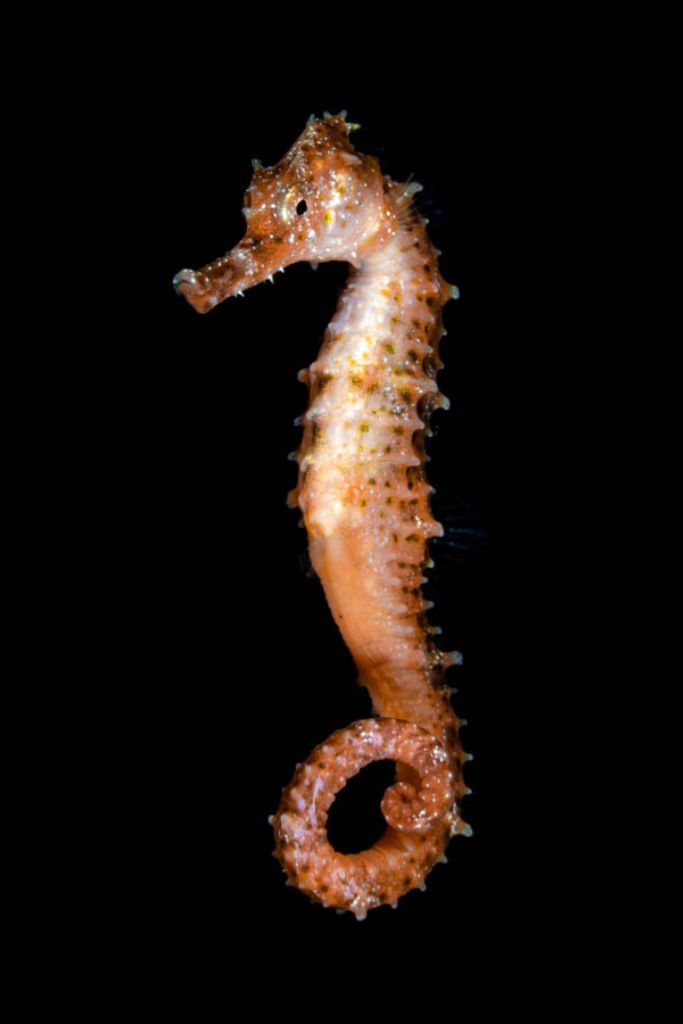
This dive is best suited to experienced and advanced divers because it’s like floating in outer space!
>>🤿 BOOK a Black Water Dive with Kona Honu Divers Here! <<
Daytime Diving
Aside from the unique nighttime dives, Kona diving is well-known for having tons of great diving to be had during the day. With many miles of coral covered coastline the western side of the Big Island has more dive sites than you can visit in many months.

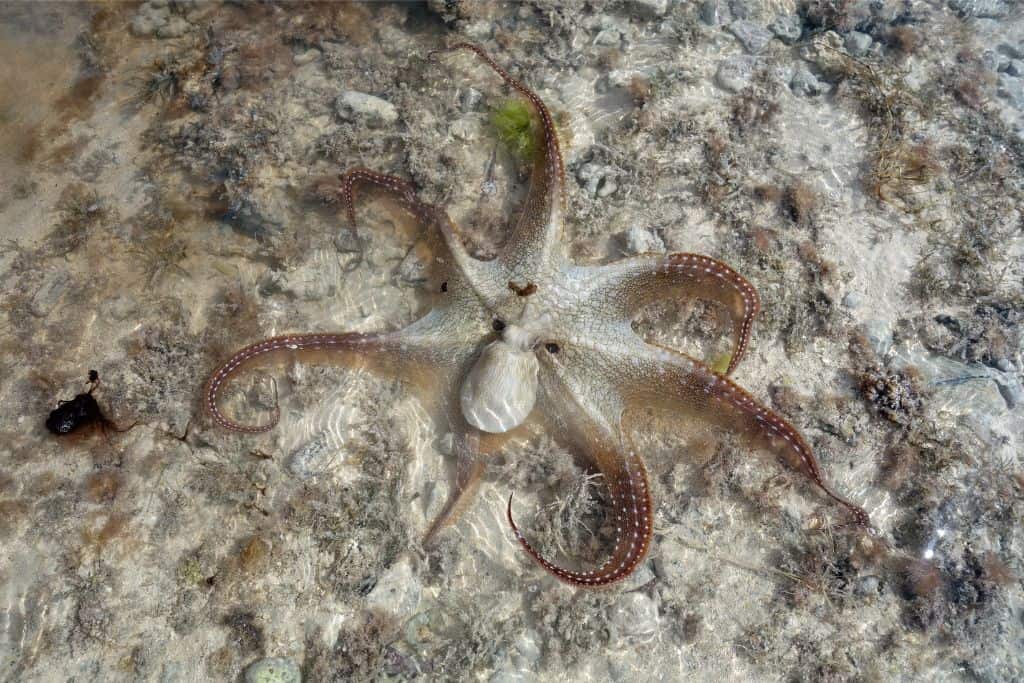
Kona’s daytime diving is not to be missed! Compared to other great places in the world Kona has lots of octopus and eels to spot on almost every dive. While the corals are not the highlight of scuba diving in Kona, the topography and variety of fish and the occasional large animal will be sure to grab your attention.
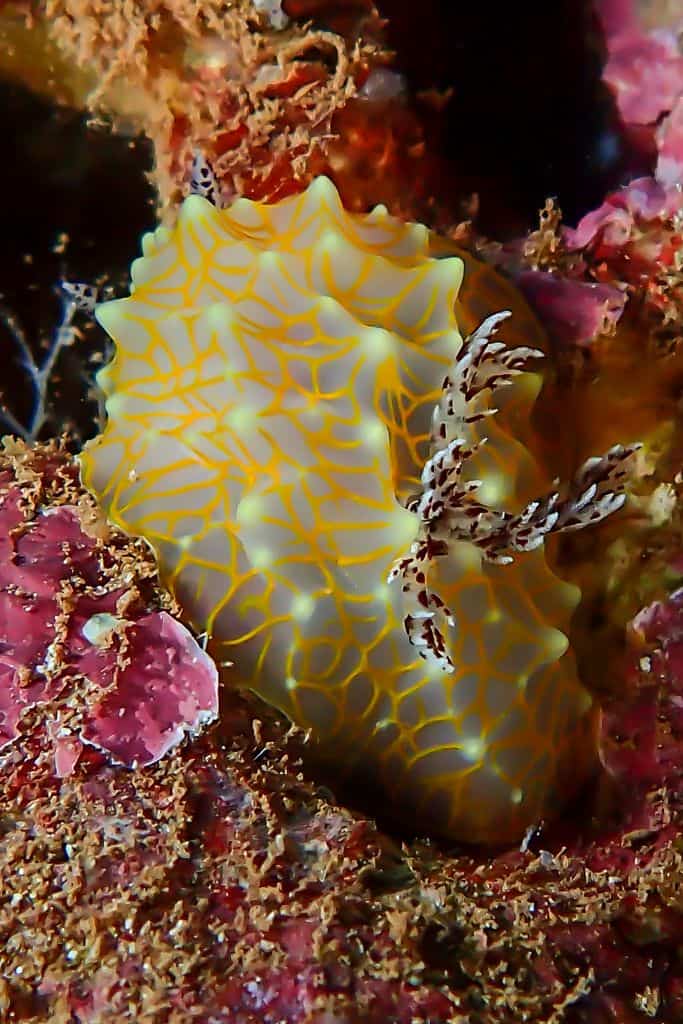
While you hunt for tiny nudibranchs and snails don’t forget to looks up or you might miss the whale shark or even a manta swimming by!
>>🤿 BOOK a Local Morning Dive with Kona Honu Divers Here! <<
To check out more daytime options you can visit Kona Honu Divers to see what is available based on your experience.
Kona has good shore diving but the sites are limited based on how difficult it can be to get in and out of the water. This guide to Shore Diving Big Island will point you in the right direction.
What Makes Kona the Best Place to SCUBA Dive in Hawaii?
The Big Island of Hawaii is the world’s largest volcano and the world’s tallest mountain poking out from the depths of the Pacific Ocean. It is also the farthest from any other land mass of anything in the world. This makes for some interesting and unique opportunities.
Kona Has Calm Waters
Kona is located on the western side of the Big Island of Hawaii. Essentially a massive volcano poking out of the sea. This means while all of the storms in the northern and south eastern Pacific which generate Big ocean swell many hundreds of miles away don’t have much effect on Kona.
In fact, the big swells generated in the western pacific are also largely blocked by the other Hawaiian islands like Oahu, Kauai, and Maui. This means that while the surf is up on these other islands, Kona often remains relatively calm. This makes it an ideal location for scuba diving and snorkeling much of the year.
If you want to visit Kona to see Hawaii’s best scuba diving, typically the summer is best as winter often experiences larger swells in the winter. There’s also more nudibranchs (colorful sea slugs) in the summer time.
Kona Has Clear Waters
Because the Big Island is a relatively new volcano that pokes out from the sea it’s also made up of fresh rock that was recently formed and has steep sides. This means the clean rock and the sharp dropoffs don’t allow much sand to form. This lack of sand, especially in shallower waters, is what differentiates Kona from the other Hawaiian islands.
So while islands like Maui and Oahu will typically suffer from poor visibility, Kona’s will typically be stellar. Visibility can range from 30 feet on a poor day to 100+ feet on a really good day. When Kona diving, an average day will be in the 40-80ft range.
Kona Has Unique Topography
The fresh lava shoreline of the Big Island makes for some pretty dramatic underwater scenery. Arches, caverns, caves, reef channels, and pinnacles are just a few of the unique features you will commonly find while scuba diving Kona. This adds to the excitement when critter hunting and diving. It also makes it relatively easy to navigate because the site has so much variety depending on where you are.
Kona Has Unparalleled Marine Life
One of the best kept secrets about the waters here on the Big Island is the large animal encounters that can be had here. While you might often hear of divers encountering whale sharks, tiger sharks, humpback whales, hammerhead sharks, manta rays, and dolphins, few places outside of Kona will offer one or sometimes several of these large animals on a single dive! While this is not common it can and does happen.
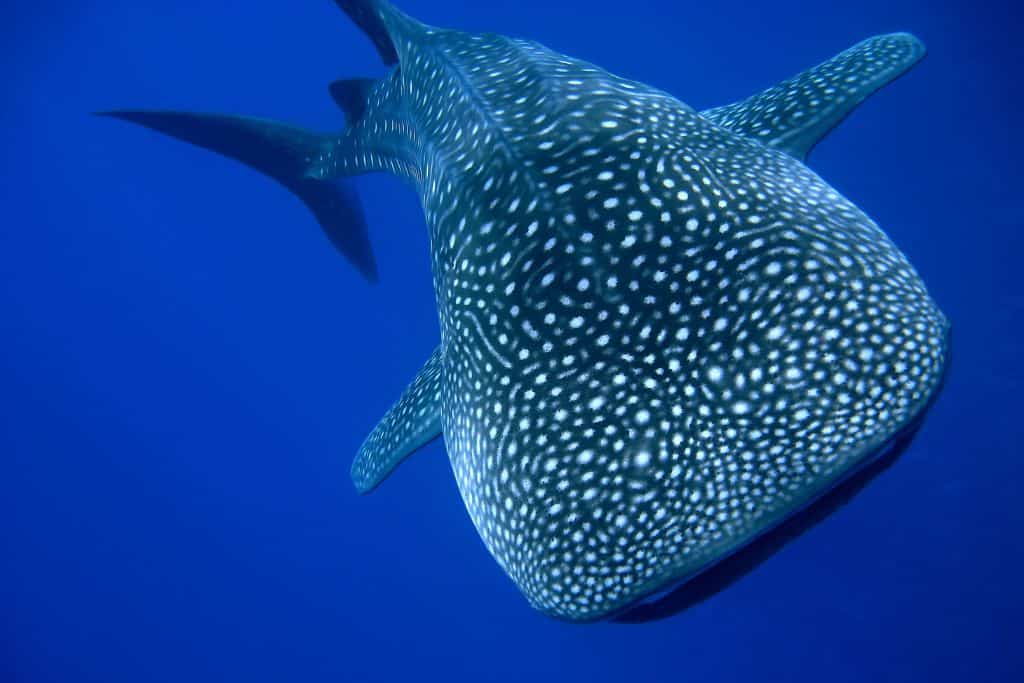
It’s not always about this big showstoppers. Sometimes it’s the small things in life that can make for a really impressive variety in your dive.
Kona is home to many such tiny critters. Nudibranchs, eels, and many little reef fish can make for a fascinating exploration.
Hawaii has the highest rate of endemicity (unique fish) in the world with over 30% of the reef fish being found only here. This means you will be sure to see something new. Pull up to a cleaning station and you’ll see our endemic cleaner wrasse service a variety of marine life.
What it Takes to Go SCUBA Diving in Kona
There are 2 options for scuba diving in Kona: Discover SCUBA and Dive Certified.
Discover SCUBA/Try SCUBA
You don’t have to be certified to go diving. Kona is one of the best destinations for new divers because of a combination of calm clear waters and diving with divemasters as an industry standard.
Discover SCUBA or Try SCUBA allows you to go diving without being certified. This means you just need a simple medical questionnaire and a little extra time and you can be diving just like all of the certified divers.
An instructor will go over the gear with you and explain the concepts of diving. They will then accompany you while you dive ensuring a relaxing and adventurous time underwater.
There is a limit of 2 divers per instructor and a maximum of 40′ deep. This is a great option for people who just want to dive without the hassle of getting certified.
Dive Certification
This is going to be the best option for those who are certain they want to dive frequently or in many places. Getting certified is relatively straightforward and only takes around 8-10 hours of self study followed by 3 days of practical application.
The first day takes place in the pool while the 2-3rd days are the actual ocean or open water diving where you will complete a total of 4 dives. Once completed you will have a grasp of all of the concepts necessary to dive to 60 feet safely.

Other Requirements
Many dive companies will also require additional questions when booking. This can include number of dives and duration since your last dive. There can be medical questions as well. This is for your protection and it’s important you answer the questions with honesty.
Where to Dive in Kona
Kona Shore Diving
The Big Island of Hawaii has miles and miles of rugged and rocky coastline most of the underwater is great diving but due to difficulty of entry much of it is not friendly to shore diving. There are a few select spots that do make for easy entry and great diving.

Puako – one of the great shore diving sites on the Big Island. While it’s not in Kona itself (located to the north) it is still a great place to dive and visit. With its shallow reefs and spectacular features it’s easily one of the best spots to shore dive Big Island.
Mile Marker 4 – Located near downtown Kona, this little gem is not too obvious from the main drag of Ali’i Drive and the entry is not the easiest but it packs a lot of goodness into a dive. Good marine life, corals and even a cavern with a canyon and arch nearby means you’ll get a bit of everything without having to stray far from Kona proper.
You can check out this shore diving Big Island guide for some more recommended spots.
Kona Boat Diving
The boat diving in Kona is one of the highlights of the Big Island and Hawaii in general. There are several dive companies all operating out of Honokohau Marina located near downtown Kona.
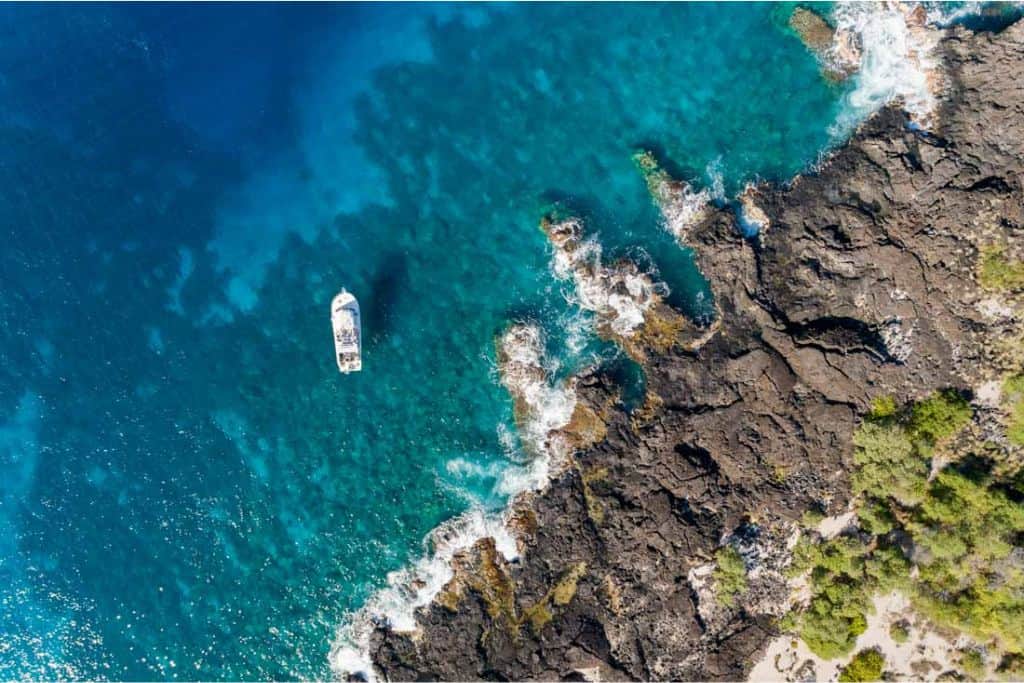
There are around 40 different dive sites all located within 20 minutes boat ride of the marina making Kona diving some of the quickest and nicest diving in the United States and the Pacific.
Naia – located just outside of the harbor this is easily one of the best dive sites in Kona and it’s a quick 5 minute boat ride. The reef drops to 80 feet and along the way you’ll encounter multitudes of eels, difficult to spot fish like the titan scorpionfish, schools of barracuda and the occasional visit from a tigershark. Also animals like eagle rays are common here. We’ve even seen a humpback whale and a tiger shark on the same dive!
Suck e’m up – A great reef scape is located near a magical swim-through with sky lights and white tip reef sharks waiting at the end. Skull cave is nearby giving divers lot’s of unique features to swim-though while also providing all of the amazing corals and marine life commonly seen along Kona’s coast.
Kona Honu Divers is the top rated and most reviewed dive company in the Pacific and was given the reader’s choice award by Scuba Diving Magazine having garnered the most praise from die-hard scuba divers. You can check out their dive options and book a dive package with them. They also offer free nitrox for certified divers.

FAQs
How Old Do You Have to Be to Scuba Dive in Kona?
It depends on the dive operator but it is possible to dive as young as 10 years old. Check with the dive operators before booking for age requirements.
Often for younger children it is necessary for the parents to accompany them.
Do You Have to Be certified to Scuba Dive in Kona?
You do not need to be certified to scuba dive. You can do a discover scuba dive without needing a certification.
How Long Does it Take to Get Certified in Kona?
The certification process is much more streamlined than it used to be. Certification typically takes 8-10 hours of self-study followed by 2-3 days of practical application diving in the pool then in the ocean.
When is the Best time of Year to go Scuba Diving in Kona?
Typically summer is the ideal time for Kona diving. This is because there is less ocean swell and the waters are about 3-6 degrees warmer than in the winter. Kona does get some south swell in the summer but this can easily be avoided by choosing dive sites with protection from that direction.

⬇️For other fun in the water adventures, Check These Out!⬇️
Kealakekua Bay Captain Cook Snorkeling
Night Snorkeling with Manta Rays
Whale Watching Tours in Kona
Epilogue
Kona diving is an experience like no other and should be on your Big Island bucket list whether it be to night dive with manta rays, nudibranch hunt, or discover underwater lava caves.
I’m Byron Kay, owner of Kona Honu Divers. We are Hawaii’s top rated and most reviewed dive company. We were given the reader’s choice award for the best dive operator in the Pacific and Indian Oceans. People not only love diving with us but they love diving in Hawaii because it is so good here. Specifically here in Kona is the best place to scuba dive in Hawaii.
Thank you Byron for writing this expertise insight on Kona diving!

🌺 Big Island Travel Planning Guide 🌺
🚨 Should I buy Hawaii travel insurance?
YES — I recommend Travel Insurance Master because you can compare multiple options with one click. With plans starting at $5/day per person, why not give yourself piece of mind? Better to have it and not need it than need it and not have it!
🚗 Is it safe to rent a car on the Big Island?
YES — It’s totally safe to drive on the Big Island. And unless you plan to chill by the resort pool the entire time, renting a car is pretty much a necessity on the Big Island! Jeep rentals are popular. I recommend Discount Hawaii Car Rental, as they have some of the best prices around.
📞 Will my phone work on the Big Island?
PROBABLY — Most, if not all, cell providers work on the Big Island. However, be prepared for some dead spots in the more remote parts of the island. For example, I always lose service driving through Hawaii Volcanoes National Park.
🛏️ What’s the best way to book my Big Island accommodations?
For Big Island hotels, Booking.com is amazing because you can often reserve your room with no money down. If you are looking for an Airbnb condo with a kitchen and more space, don’t forget to check VRBO for potentially better prices and options.
✈️ What’s the best site to buy Big Island flights?
I recommend looking at Skyscanner for finding cheap flights. Pro Tip: check if flying into Hilo is cheaper than flying into Kona.
🛂 Do I need a passport to visit Hawaii?
NO — If you are a US citizen, you do not need a passport as Hawaii is part of the United States. If you are from out of the country, the same passport and visa requirements are the same as entering anywhere in the United States from your country.
🧳What should I pack to the Big Island?
Pack for tropical weather but also prepare for colder than expected nights and early mornings, so a light sweatshirt is recommended. Check out this list of 5 Things Not to Forget to Pack.


