30 Things Not to Do in Hawaii – By a Local

A lot of people research what to do in Hawaii, but not you! You’ve come looking for 30 things NOT to do Hawaii!
Well, you’ve come to the right place. While living in Hawaii for a year, I definitely learned a thing or two about the ways of the islands that I didn’t know before.
Let me share with you what not to do in Hawaii!
Top Things Not to Do in Hawaii
If you’re short on time, a list of 30 things not to do in Hawaii might be too long.
To cut to the chase, here’s the list summarized into 3 things:
- Don’t touch the wild animals
- Don’t underestimate nature
- Don’t be a dumb tourist
Now, let’s get into the detailed breakdown!
What Not to Do Regarding Hawaiian Animals
1. Disturb the Sea Turtles

Green sea turtles in Hawaii are a threatened species; the Hawksbill sea turtle is even endangered. They are protected by federal and state law.
For their safety, it is recommended to stay at least 10 feet away from the sea turtles whether beached or in the water. You can get fined for touching them.
I’ve seen people swimming around them and blocking them from their escape route. Don’t do that.
2. Touch a Manta Ray
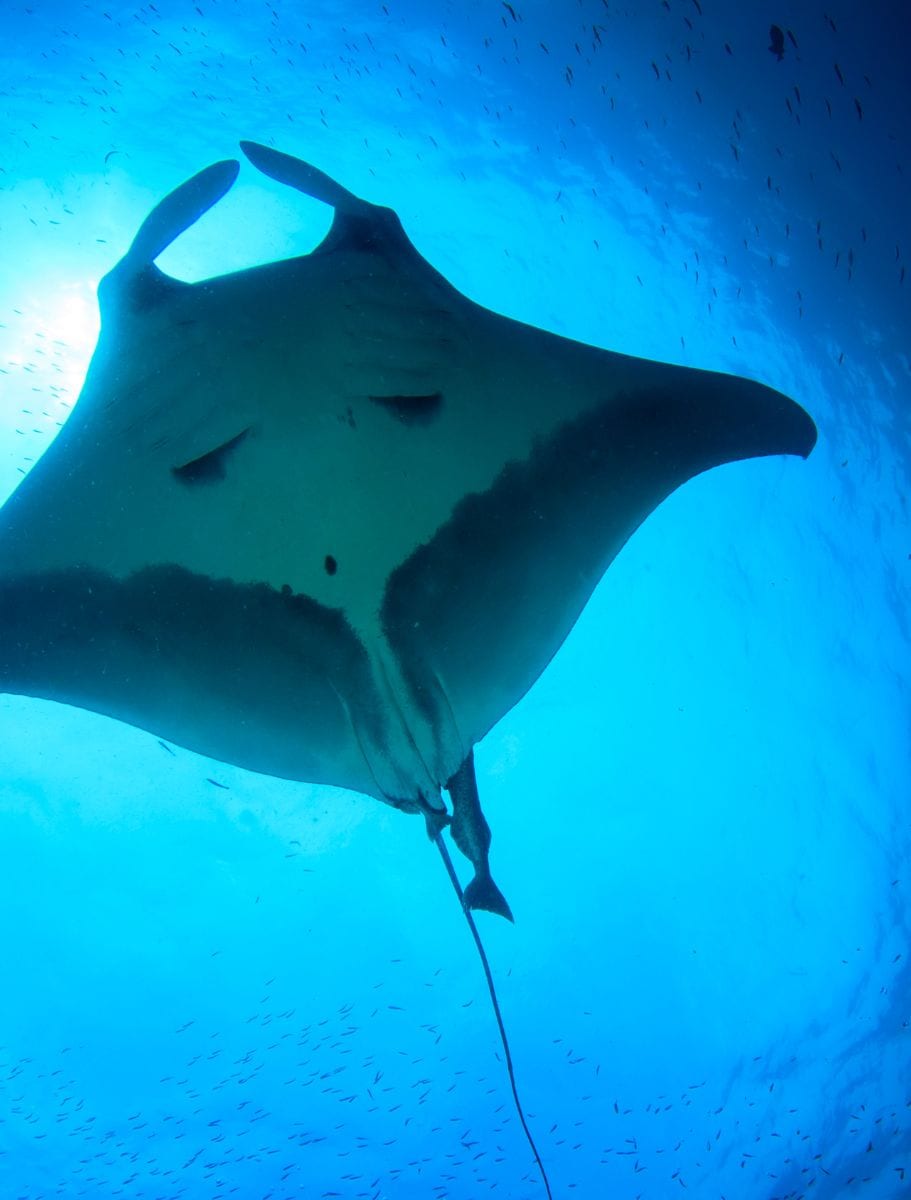
If you are on a manta ray night snorkel tour, you will be told not to touch them, not only because they are wild animals but because of their mucus coating.
Manta rays are fish with a slime coating on their bodies to protect them from bacteria. If you touch them, the slime wipes away and the manta ray can be exposed to infections.
However, don’t be surprised if they bump into you, like one did to me on a night snorkel tour.
If you’d like to go on a manta ray night snorkel on the Big Island,
find tours here! ➡️
3. Disturb Hawaiian Monk Seals
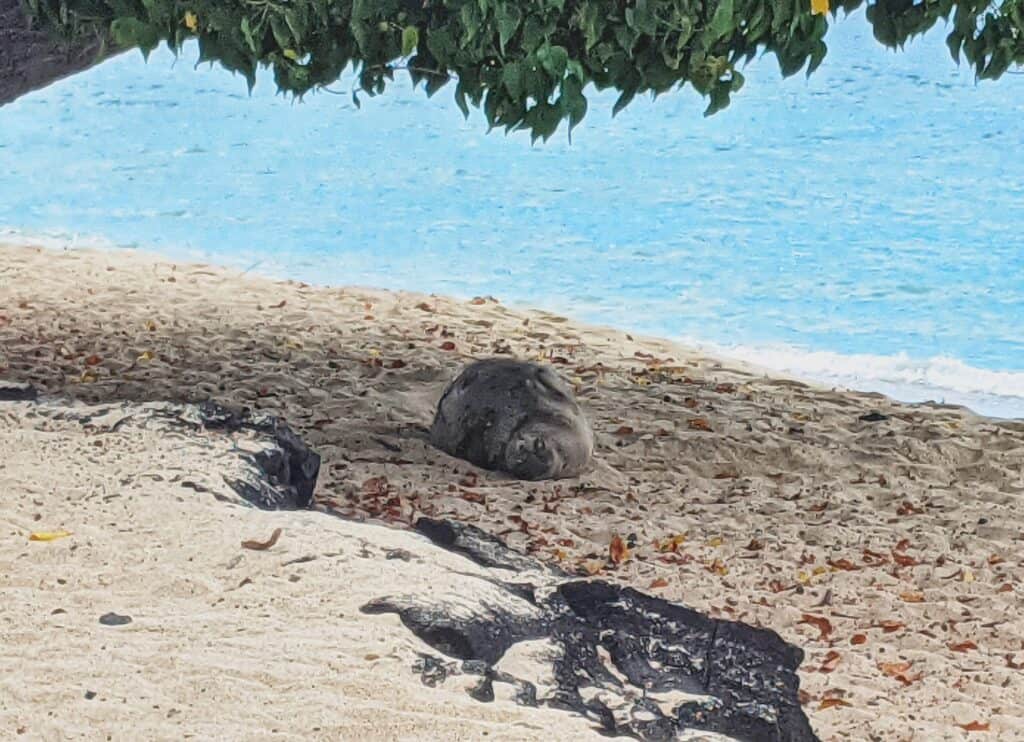
Hawaiian monk seals are among the most endangered marine mammals in the world with only about 1,570 in existence and are protected by federal and state law.
The federal guideline is stay 50 ft away. You can get fined for touching them.
You are also encouraged to report any sighting Marine Animal Stranding Hotline at 1-888-256-9840. I saw one beached, but it was already reported and roped off for safety.
4. Get Close to Hawaiian Spinner Dolphins
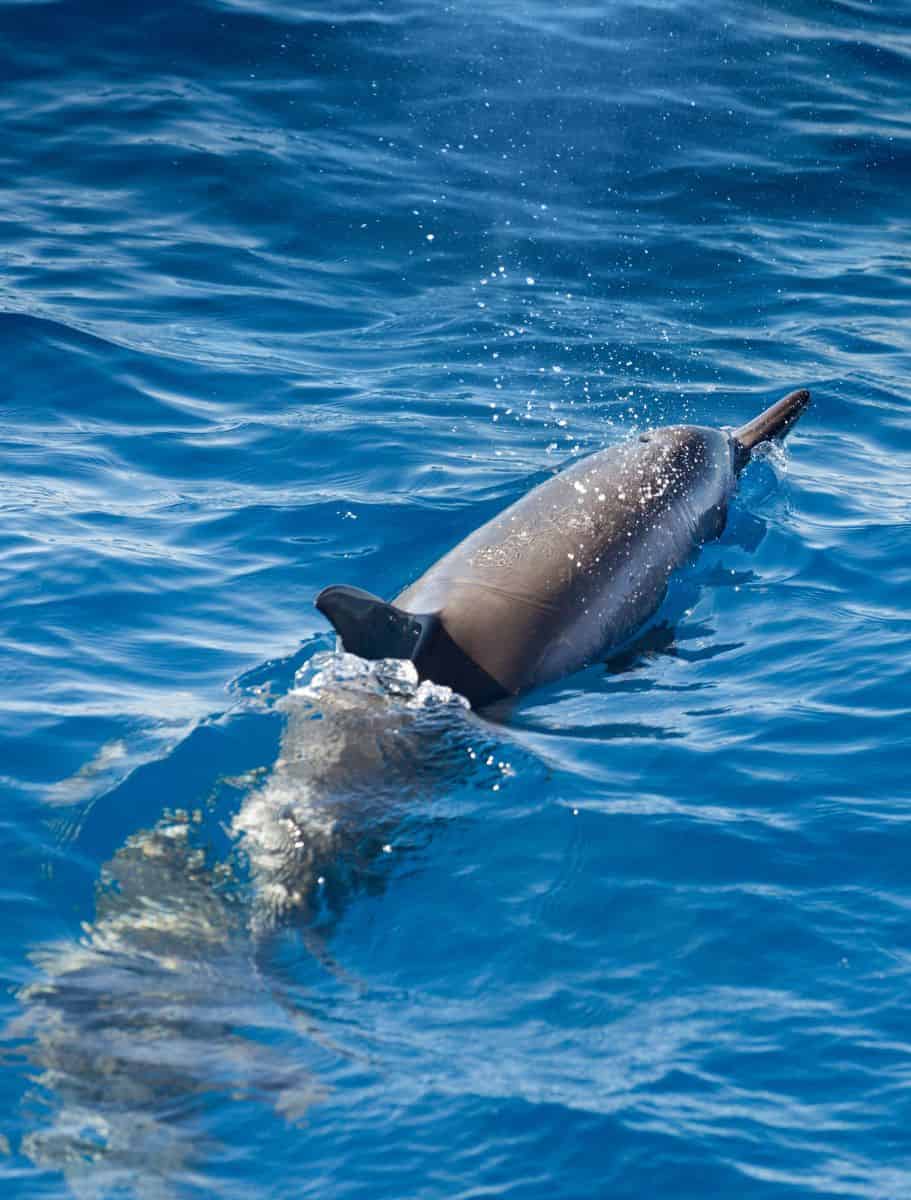
It is prohibited to approach, swim with, or be within 50 yards of a Hawaiian spinner dolphins.
While there used to be dolphin swim tours, those tours ceased in 2021 when this law was enacted.
You can get fined for touching them.
5. Feed the Nēnē

I have never cared about geese until I met a nēnē. These beautiful endemic Hawaiian geese with striped necks are the rarest geese in the world with a population of about 3,862 and are endangered.
You can get fined for feeding or touching them.
I was sitting in my car with the door open and had a couple of nēnē waddle across the parking lot hoping for some treats. They even got a little aggressive towards me. That’s because they have become used to humans giving them handouts, which is not good.
Also be careful while driving as you don’t want to run one over. There are nēnē warning signs on roads where they are frequently seen.
🪿 Places I always saw nēnē:
What Not to Do Regarding Being a Hawaiian Tourist
6. Only Have Credit Cards
In a mostly cashless society, it’s still odd to me that Hawaii’s cash system is still pretty strong.
If you visit local farmer’s markets in Hawaii, you will find some vendors take cash only, or they prefer cash to avoid credit card fees.
One of the best things to do in Hawaii is buy fresh fruit from a stand at the end of someone’s driveway and those are always cash only. I’m always mad at myself if I’m out of cash and pass a stand with avocados, mangos, or apple bananas.
So be sure to bring cash with you to Hawaii and not have only credit cards.
7. Assume Your Resort is the Real Hawaii
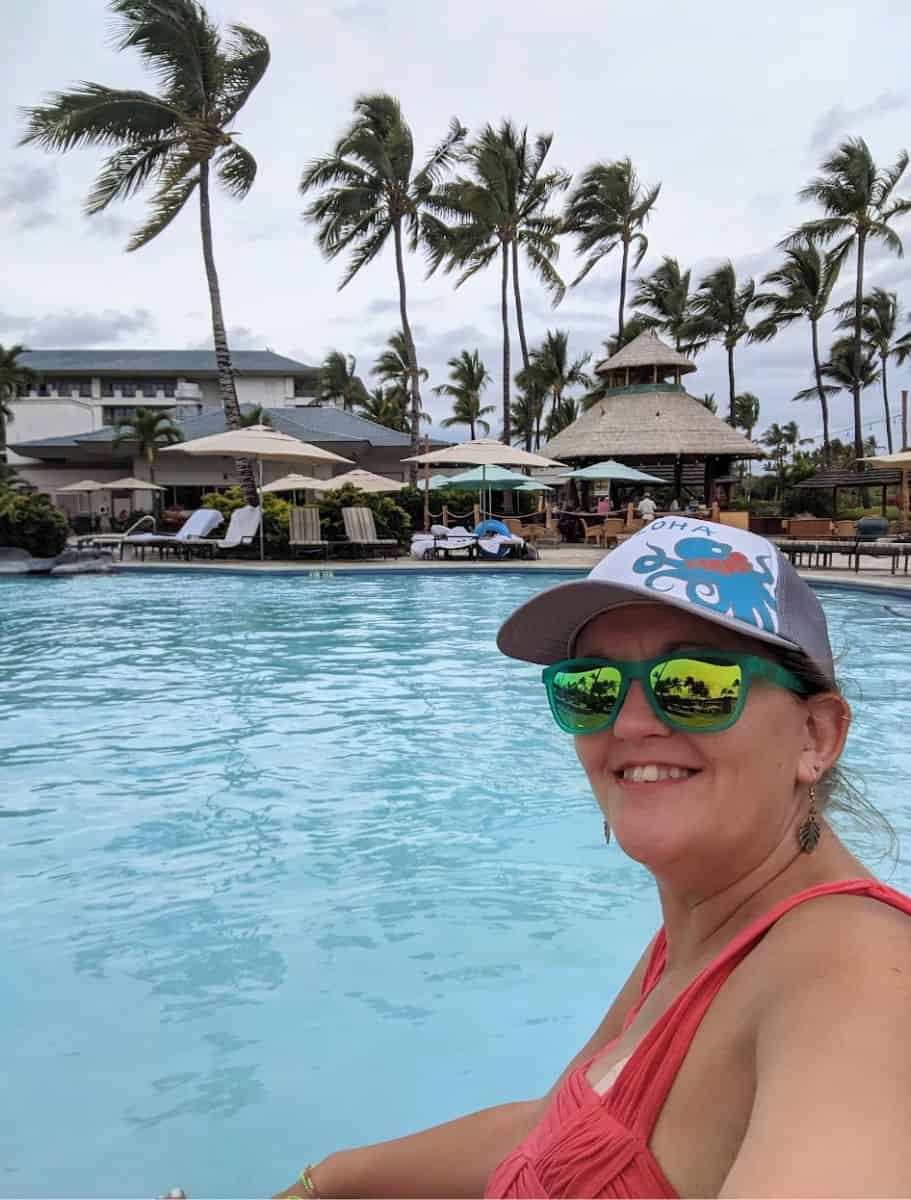
Many choose to visit Hawaii and opt for a luxurious resort stay, and who can blame them? These resorts cater to your every need and whisk you away from the demands of everyday life.
However, it’s important to recognize that this resort experience is like stepping into a fantasy, much like Disneyland. This is not how local Hawaiians live.
If you limit your exploration solely to the resort grounds without venturing out to discover the authenticity of the island, you’re essentially encountering a carefully curated facade rather than truly experiencing the genuine essence of Hawaii.
Go grocery shopping for a meal, ask about a hiking trail that locals like to do, visit local markets and shops, and immerse yourself in the true culture of Hawaii.
8. Leave Valuables in the Car
Thankfully, I have never had my car rental broken into in Hawaii. However, I have heard many stories of people that have.
While I don’t consider Hawaii to be a dangerous place, I do exercise common sense when it comes to security.
I don’t leave my stuff in plain sight in the car. I make the car look empty so there’s little reason for anyone to be tempted to break in.
Some people say to leave the doors unlocked so windows don’t get smashed. I couldn’t tell you if one way is better than the other; I’ve done both.
💀 You Might Also Like to Know:
Is the Big Island Dangerous?
Is Oahu Dangerous?
9. Take Sand or Lava Rock Home
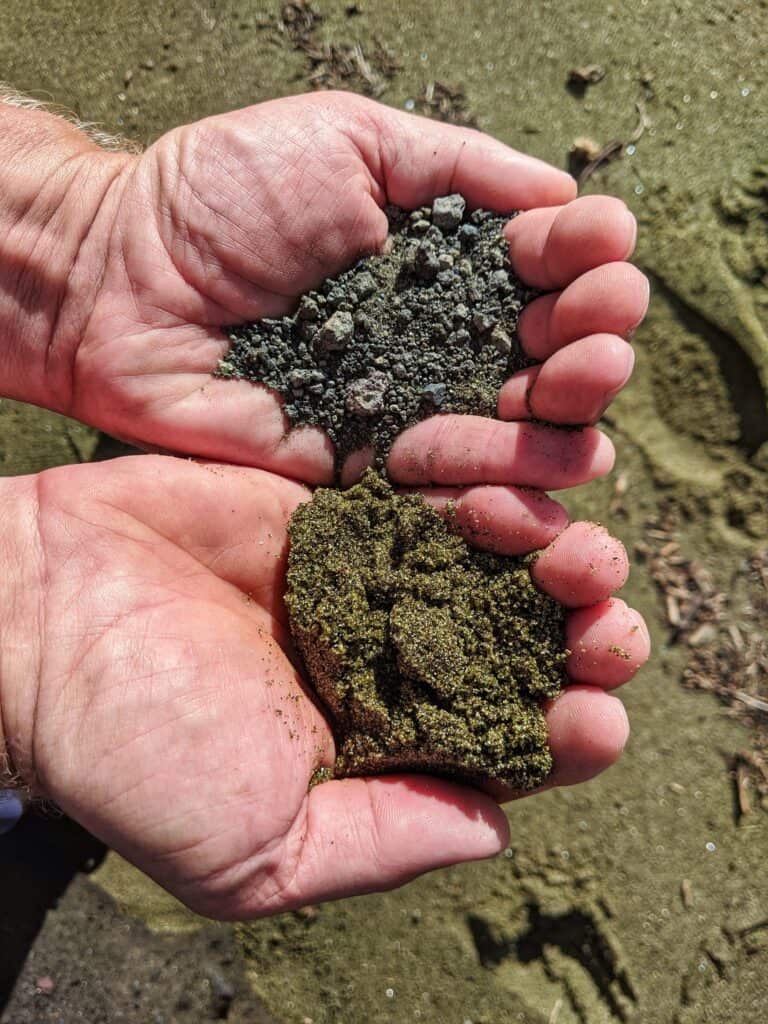
It may be tempting to bring home a lava rock souvenir, however taking lava rocks is illegal found in National Parks.
It is also illegal to take sand home from Hawaii. So sadly, no collecting little bottles of white sand, black sand, green sand, and red sand.
They do this to protect the integrity of the islands, so it can be enjoyed and preserved for many years to come. If everyone took a piece of Hawaii home, there would be some gaping holes in the land.
🏖️ Different colored beaches to visit on the Big Island:
Makalawena Beach – white sand
Kua Bay Beach – white sand
Magic Sands Beach – white sand
Punalu’u Black Sand Beach – black sand
Isaac Hale Park – black sand
Papakolea – green sand
10. Eat Only Familiar Foods

Trying new foods is part of the joys of traveling. Don’t limit yourself to only the familiar foods you can find back home.
Hawaiian cuisine has a unique blend of diverse cultures and ingredients, like the famous poke bowls, laulau (pork cooked in ti leaves), and loco moco (rice, gravy, and an egg on top).
And let’s not forget about sweet treats like shave ice or malasadas!
However, did you know that McDonald’s has Hawaiian items on their menu like a Spam or Portuguese sausage platter with rice? Or fried haupia (coconut) pie or taro pie?
Don’t be afraid to step out of your comfort zone and try new foods you won’t find elsewhere!
11. Be Impatient with ‘Island Time’
“Island time” refers to a relaxed and unhurried pace of life found in local Hawaiians.
Don’t be surprised if things move at a slower pace here, like from your coffee barista or restaurant staff.
One of the most frustrating things I ran into was small businesses being closed during posted open hours…just because.
All you can do is pack your patience, go with the flow, and chillax dude!
What Not to Do Regarding Hawaiian Beaches
12. Use Non-Reef Safe Sunscreen
Traditional sunscreens often contain certain chemicals that have been identified as harmful to coral and marine life such as oxybenzone, octinoxate, and avobenzone.
When swimmers and beachgoers wear these sunscreens, the chemicals can wash off into the ocean, contributing to coral bleaching, disrupting the reproductive systems of marine organisms, and even causing coral death.
Reef-safe sunscreens, on the other hand, are formulated with eco-friendly ingredients that do not pose a threat to coral reefs.
In fact, selling non-reef safe sunscreen in Hawaii has been banned; that’s how serious they are taking it.
Find reef safe sunscreen here ➡️
Or, you can be like me, and not wear any sunscreen and take your chances with skin cancer later.
13. Visit a Nude Beach (if you dislike hairy butts)
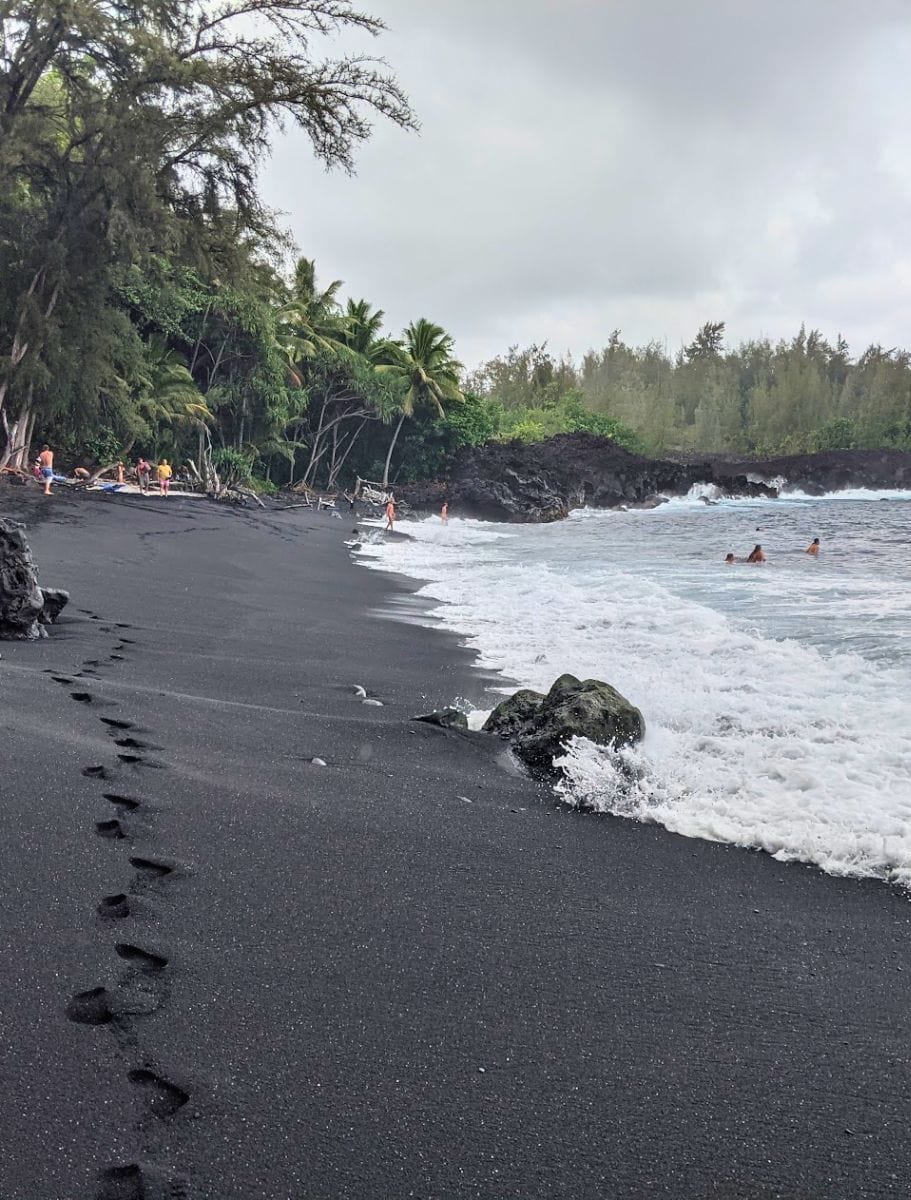
While it’s surprisingly legal to sunbathe topless in Hawaii, it’s technically illegal to sunbathe nude. But that doesn’t deter some non-state beaches to be designated unofficial “clothing optional” beaches.
Research which ones they are on each island so you are aware of them and not surprised when you arrive. I researched ahead of time and was still surprised; I didn’t believe it was going to be true haha!
If you are uncomfortable with naked butts on the beach, avoid them.
14. Wear Valuables
I often see posts on Facebook groups of someone who has lost or found a wedding ring at a beach.
If you know you have loose jewelry, take it off and secure it somewhere before getting in the water. Leave it in your hotel room or even back home.
Another article that’s often lost at the beach are sunglasses. Perhaps you’re wearing them, just wading in the ocean, but then an unsuspecting wave catches you, pulling you under and the sunglasses get swept from your head, gone forever.
Again, take them off before getting in the water.
What Not to Do Regarding the Ocean
15. Touch the Coral
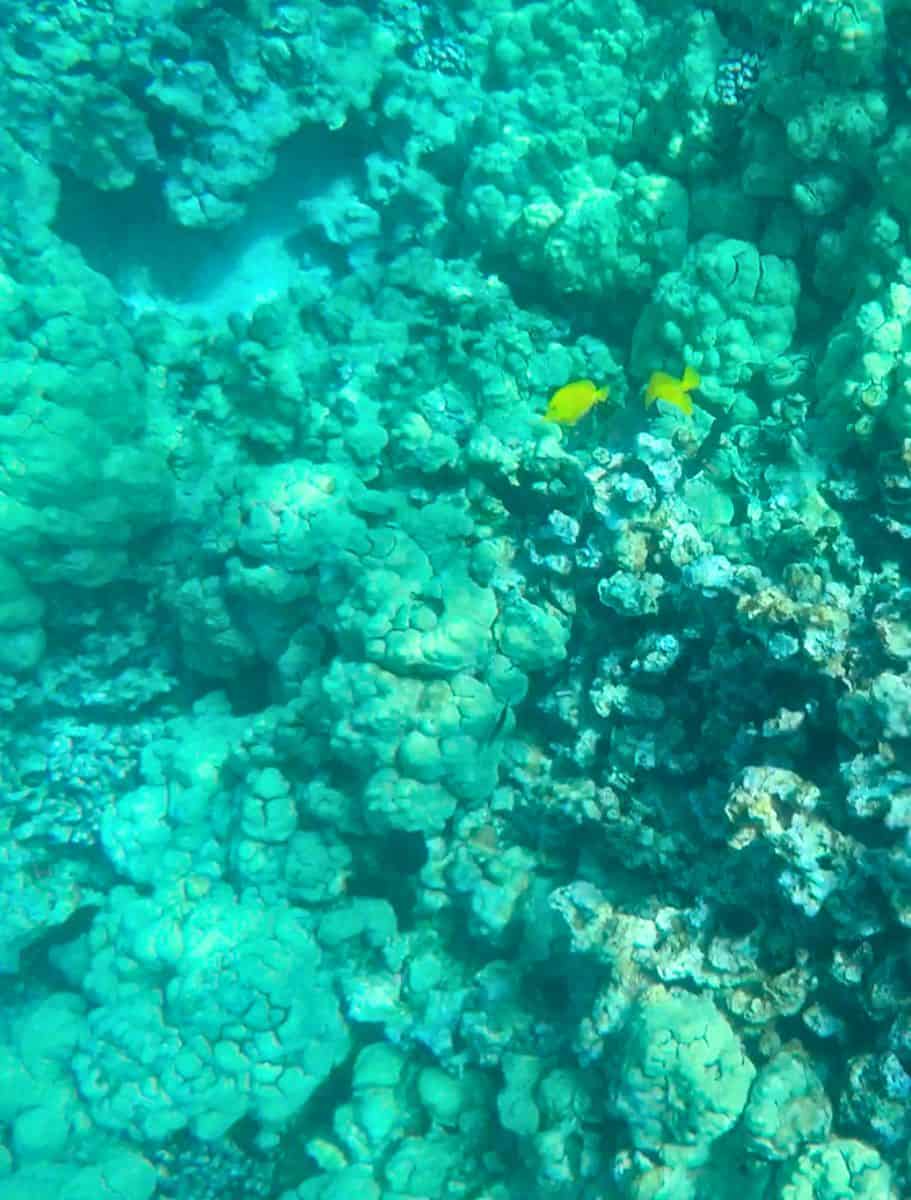
Coral reefs are delicate ecosystems, easily damaged by physical contact. Coral polyps, the living organisms that make up coral, can be harmed or killed when touched, even if touched gently.
As marine life relies on coral for shelter and food, touching the coral not only harms the coral but also the habitats surrounding the coral.
I also know from personal experience that touching coral can be super dangerous. I’ve barely nicked a piece of coral on the beach and it sliced my foot open. My dad’s cut even got infected.
So don’t touch the coral!
16. Turn Your Back on the Ocean
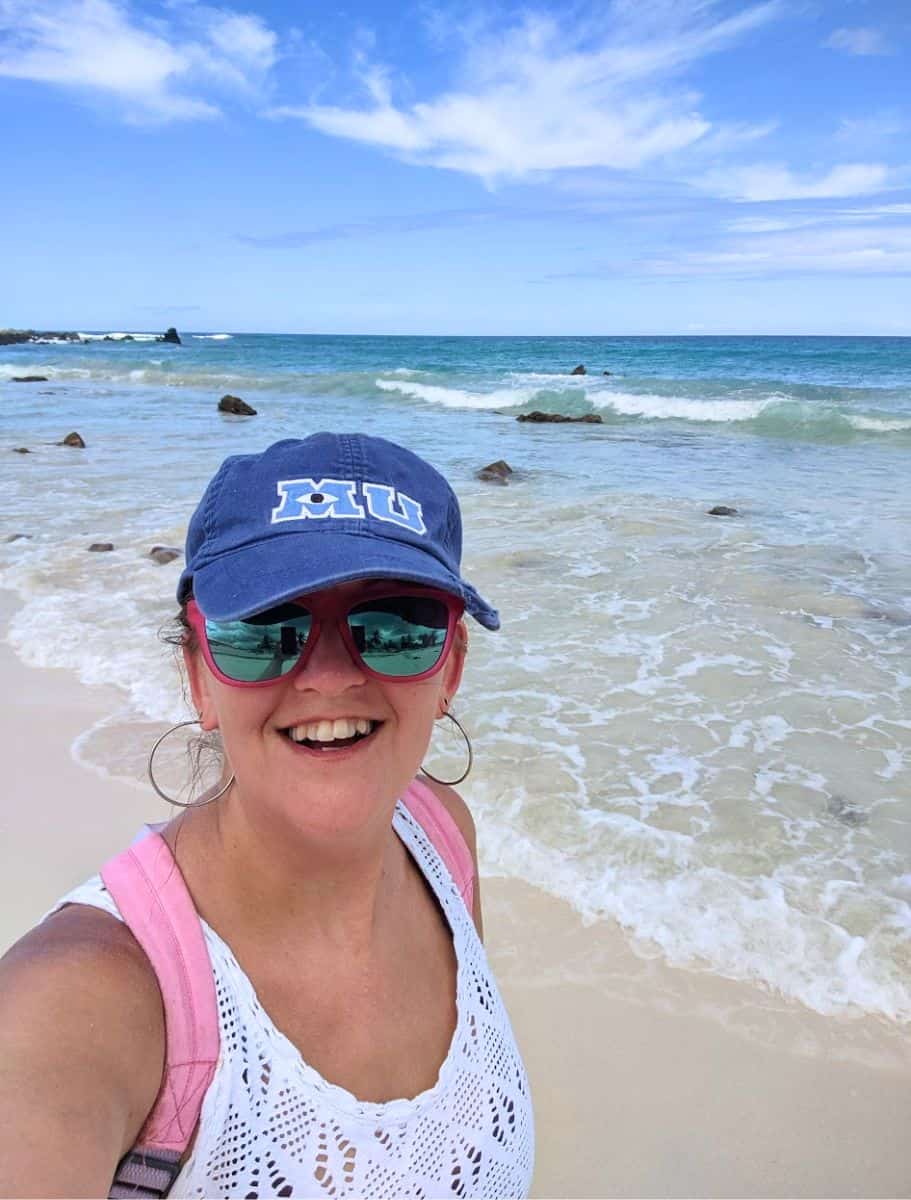
The saying is true, “Don’t turn your back on the ocean.” Wave strengths vary from wave to wave. The ocean may seem consistent with wave sizes, so you turn your back to water either standing on the beach or floating out in it.
Then all of a sudden WHAM! A big one hits you, slamming you into the sand or dragging you out to sea. I may or may not know about this firsthand! 😛
Don’t underestimate the power of the ocean.
17. Ignore Rip Current Warnings
Speaking of the power of the ocean, be aware that rip currents happen. If lifeguards have scouted the ocean, they will place warning signs on the beach.
But not every beach has lifeguards. Learn the symptoms of rip currents and how to survive if you get pulled into one.
18. Ignore High Surf Warnings
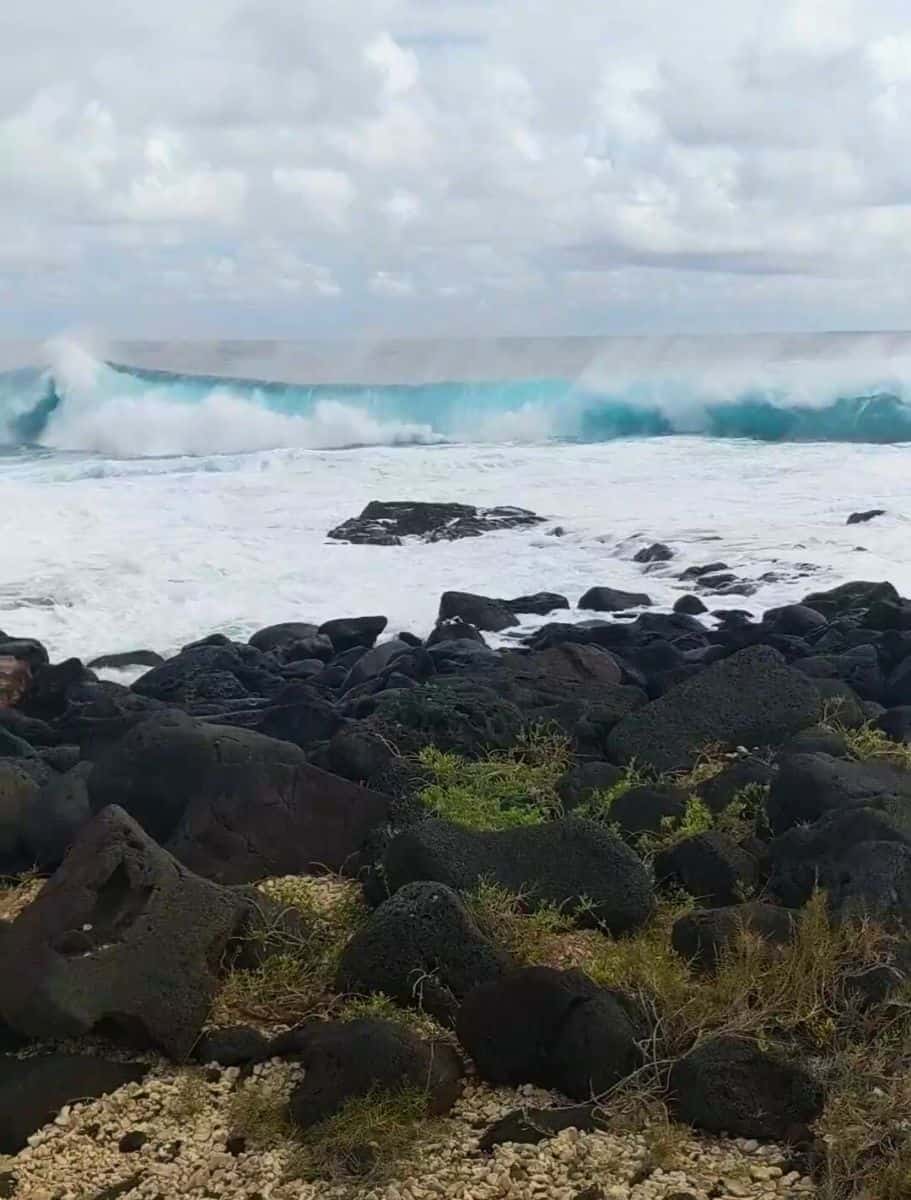
High surf warning signs indicate that there are hazardous ocean conditions with unusually large and powerful waves.
When these warnings are posted, it means that the surf conditions pose a significant risk to beachgoers and water activities and that the ocean is not safe.
19. Ignore Shark Sighting Warnings
Beaches can sometimes close if there’s been a shark sighting or accident. If these signs are posted, don’t get in the water.
Typically the warnings are up for only a couple of days, until they are sure that the shark has moved on.
But of course, there is no guarantee of not encountering a shark.
What Not to Do Regarding Hawaii Weather
20. Spend Time Near Creeks or Waterfalls After Rain
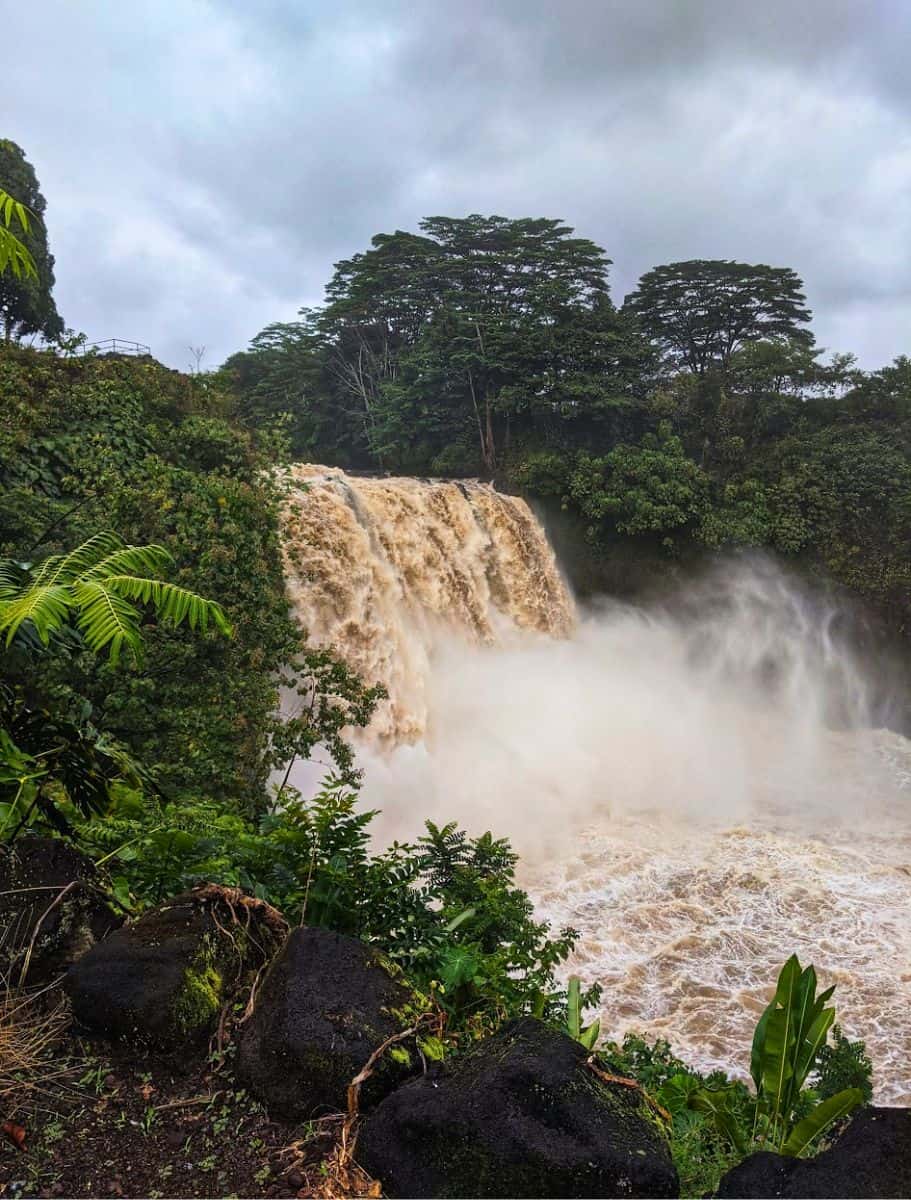
After a day of rain in Hawaii, it’s crucial to exercise caution and avoid creeks and waterfalls. Rainfall can quickly accumulate in mountainous regions, leading to sudden and powerful surges of water downstream.
Creeks and waterfalls, which may appear calm under normal conditions, can transform into dangerous flash floods in a split second.
It also goes without saying that you should not swim in bodies of water that are swollen, raging, and muddy brown after a rain.
🌧️You Might Also Like:
What to do on the Big Island when it rains
21. Assume the Road is Safe During Rain
Flash floods don’t only happen in riverbeds, it can also happen over roadways.
Authorities will often close certain highways and roads during a heavy rainfall due to flooding. One time I passed them just as they were blocking the road; I was the last car through and made it just in time.
Besides floods, be aware that mudslides can happen. I’ve almost hit small boulders in the middle of the road. Takes those curves slow when you’re on roads that hug hills.
22. Underestimate the Power of the Sun
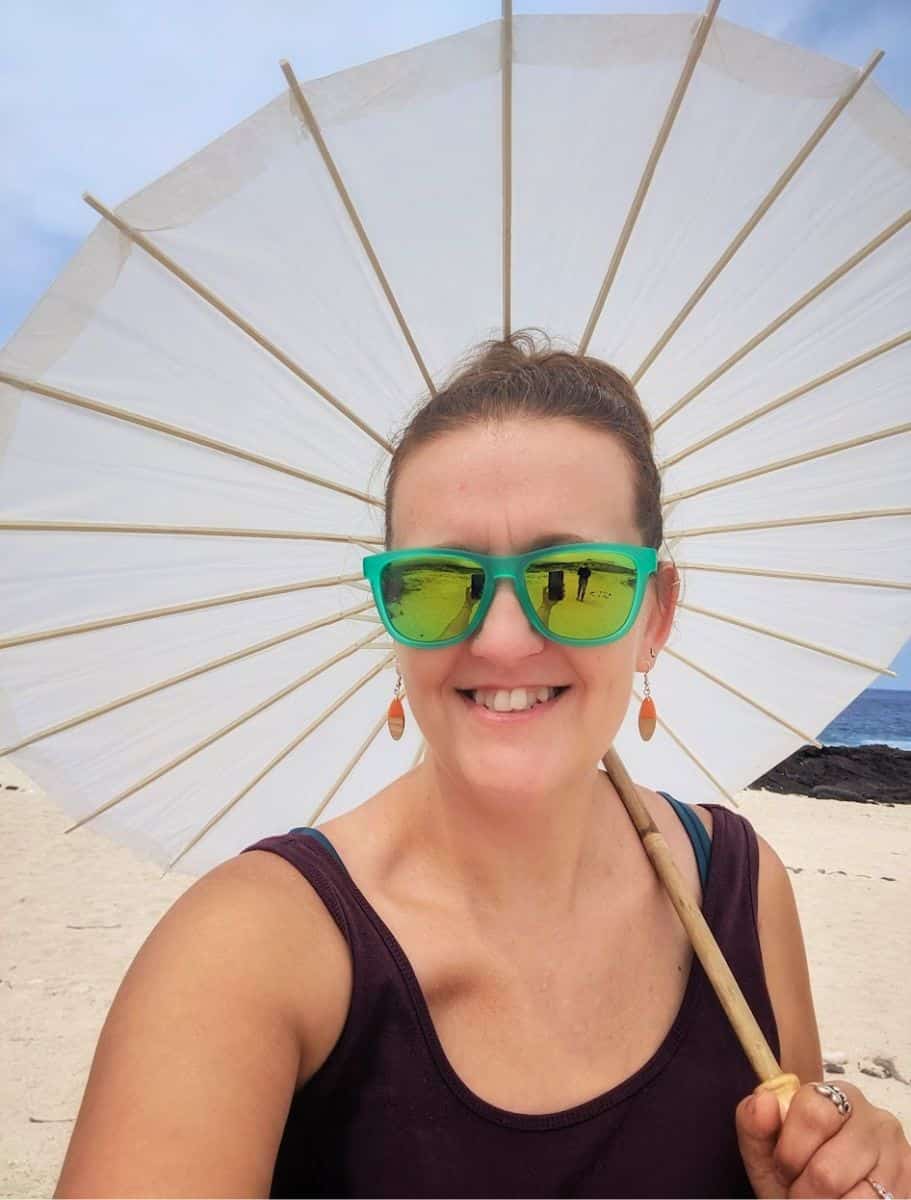
There are places in Hawaii that are actual desert terrain and not tropical. You need to take the same precautions as if you were visiting Arizona.
Use sun protection, whether sunscreen, hat, or SPF long sleeves. And stay hydrated!
I can’t tell you how many times I’ve gotten minor heat strokes because I was exposed for too long to the sun and didn’t drink enough water. I am more susceptible to overheating than the average person though I think.
23. Be Surprised at Bipolar Weather
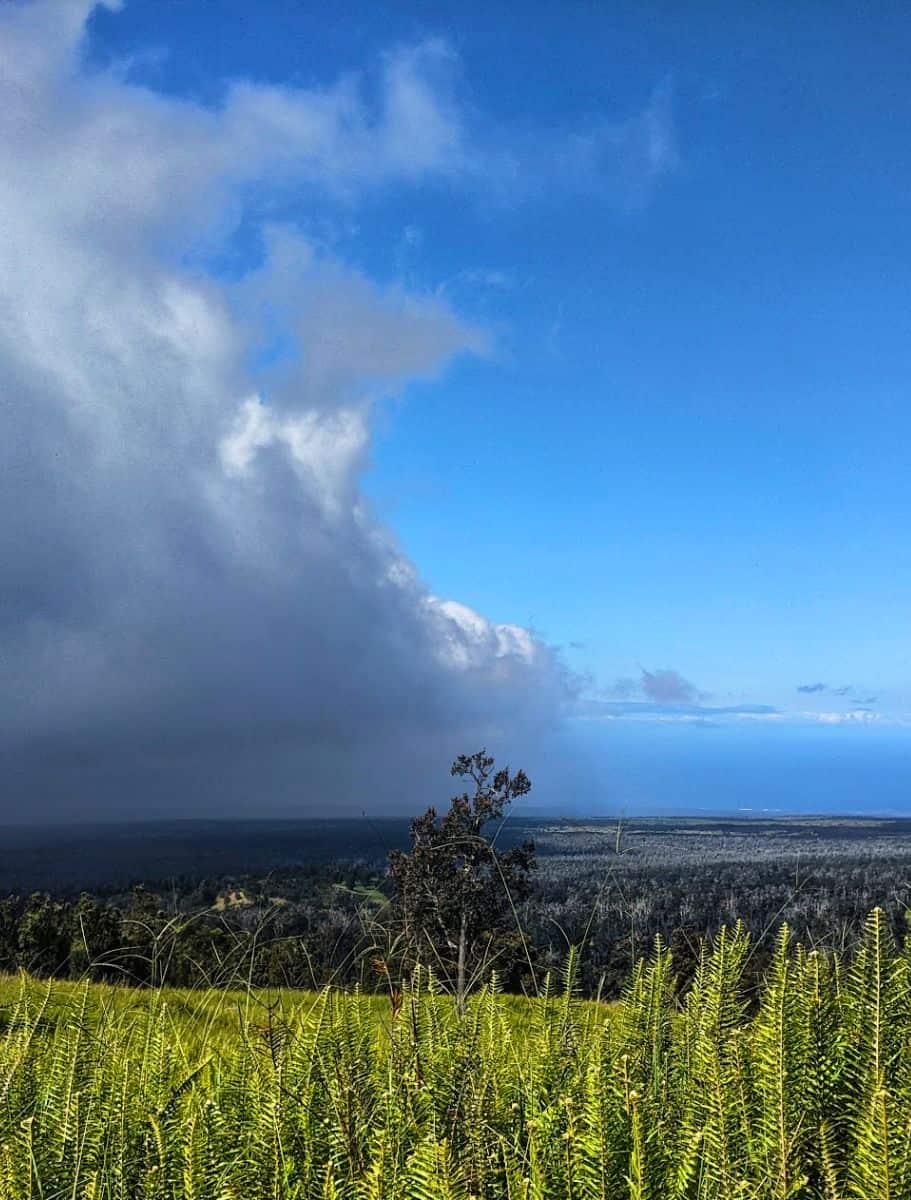
Certain places on the islands are more susceptible to bipolar weather, especially at higher elevations.
One minute the sun is shining and you’re prepared to sunbathe on the lanai at your condo all day. The next minute, it’s downpouring and you’re drenched.
This is why renting a convertible isn’t the wisest car choice if you plan to do circle tours on the islands. You’ll be constantly putting the roof up and down as you pass different weather paths.
Did you know that it can even snow in Hawaii? While you’re basking on a sunny beach, you could be looking up at a snowcapped mountain! How’s that for bipolar?!
What Not to Do Regarding Hiking in Hawaii
24. Assume You Won’t Get Altitude Sickness

Altitude sickness is a very real threat, especially on the islands of Maui and Big Island.
The summit of Haleakala on Maui sits at over 10,000 feet, while Mauna Kea on the Big Island stands at almost 13,000 feet.
It’s important to know the symptoms of altitude sickness: headache, nausea, vomiting, fatigue or dizziness.
There are warning signs before scaling the mountains that young children, pregnant women, and people with heart problems shouldn’t summit.
I’m a relatively healthy person so didn’t even think I would be affected by the 9,000 elevation on Mauna Kea. At first I didn’t even notice I wasn’t feeling well as the symptoms were pretty subtle. But I definitely felt a little light headed, slightly dizzy, and nauseous.
However, as soon as I was back down to sea level I felt perfectly normal again.
25. Wear Flip Flops
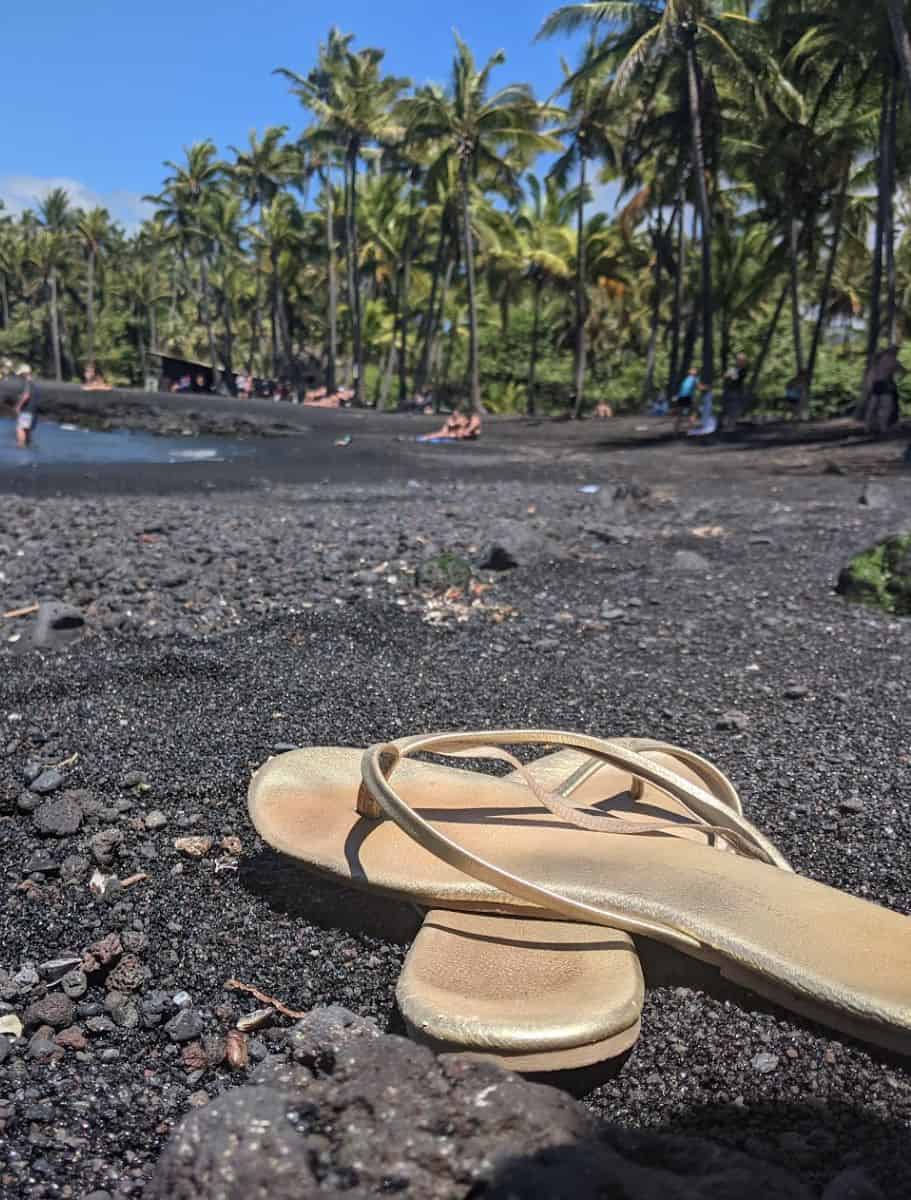
Flip flops are my go-to shoe in Hawaii, but not a good idea while hiking.
For obvious reasons, flip flops can easily slip off, get caught on roots, and even give you blisters between your toes.
If you’re hiking over rough lava fields, you could stub and cut your exposed toes on rocks, or it get stuck in between rocks causing you to trip. If the soles of your flip flops are cheap foam, expect them to get shredded.
Wear shoes with closed toes and thick soles.
26. Forgetwater with me because I’m stupid.
26. Ignore Closed Trail Signs
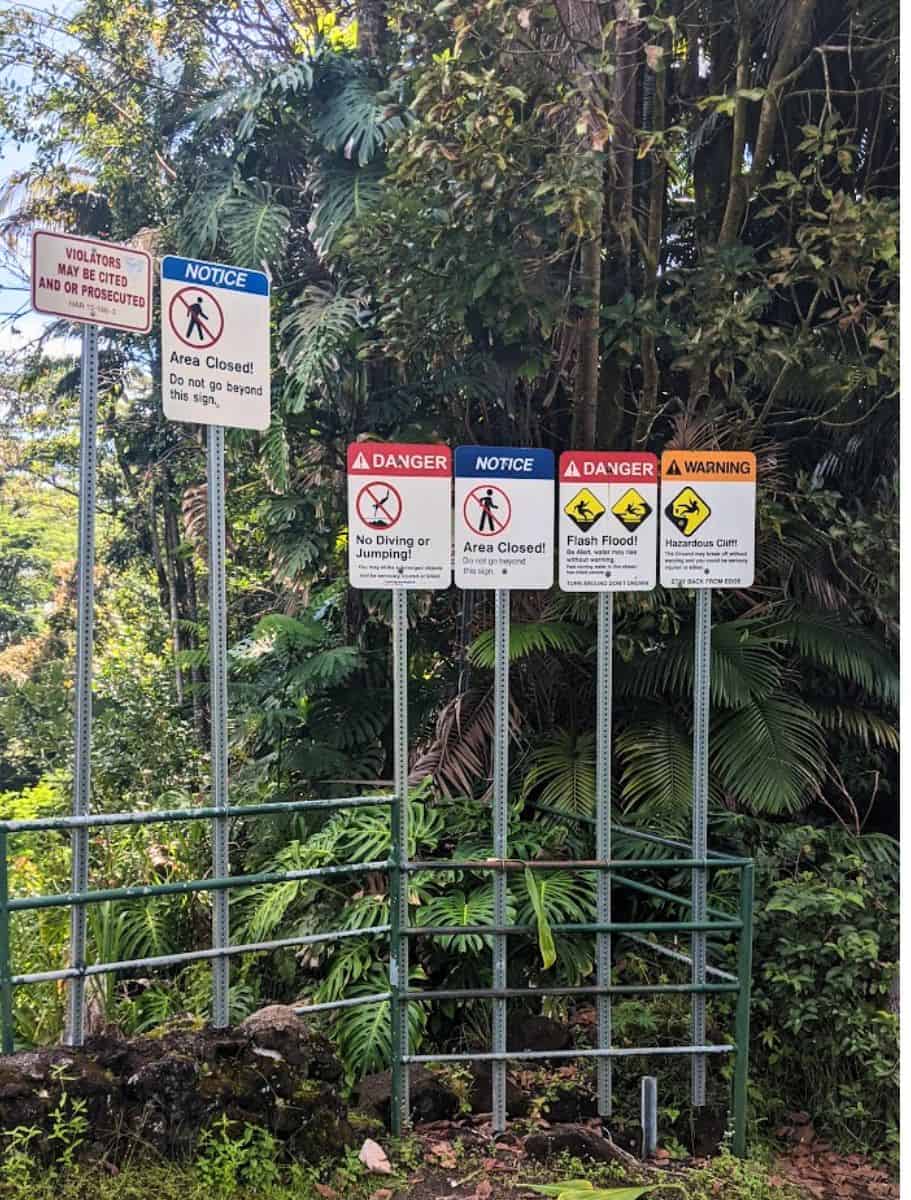
Don’t be surprised if you run into Trail Closed signs in Hawaii. There are a variety of reasons a hiking trail can be closed:
- Hazardous conditions such as unstable terrain or rockslides
- Areas undergoing restoration and conservation efforts and are avoiding environmental damage and disruption of ecosystems
- Trails may pass through areas where wildlife is particularly sensitive to human presence like breeding nēnē
- Trails may be undergoing maintenance or repair work
27. Be Surprised at Slippery Trails
After a bout of rain, trails through the tropical forests can get extremely muddy and slippery.
I have almost lost my footing a few times by slimy roots and mud.
Watch where you step!
28. Unalert to Wild Pigs
There may not be mountain lions or bears on Hawaii, but wild pigs run rampant here and should not be disregarded as dangerous. If they feel threatened or are protecting their young, they can and will attack you. Tusks are no joke.
One time I went hiking on the Big Island, I was in a densely forested section and almost ran into one. Thankfully, it didn’t give me the time of day and I was able to walk right on by it. But I knew people who have been trapped in their own yards due to these feral pigs.
What Not to Do Regarding Hawaiian Culture
29. Climb on Historical Structures
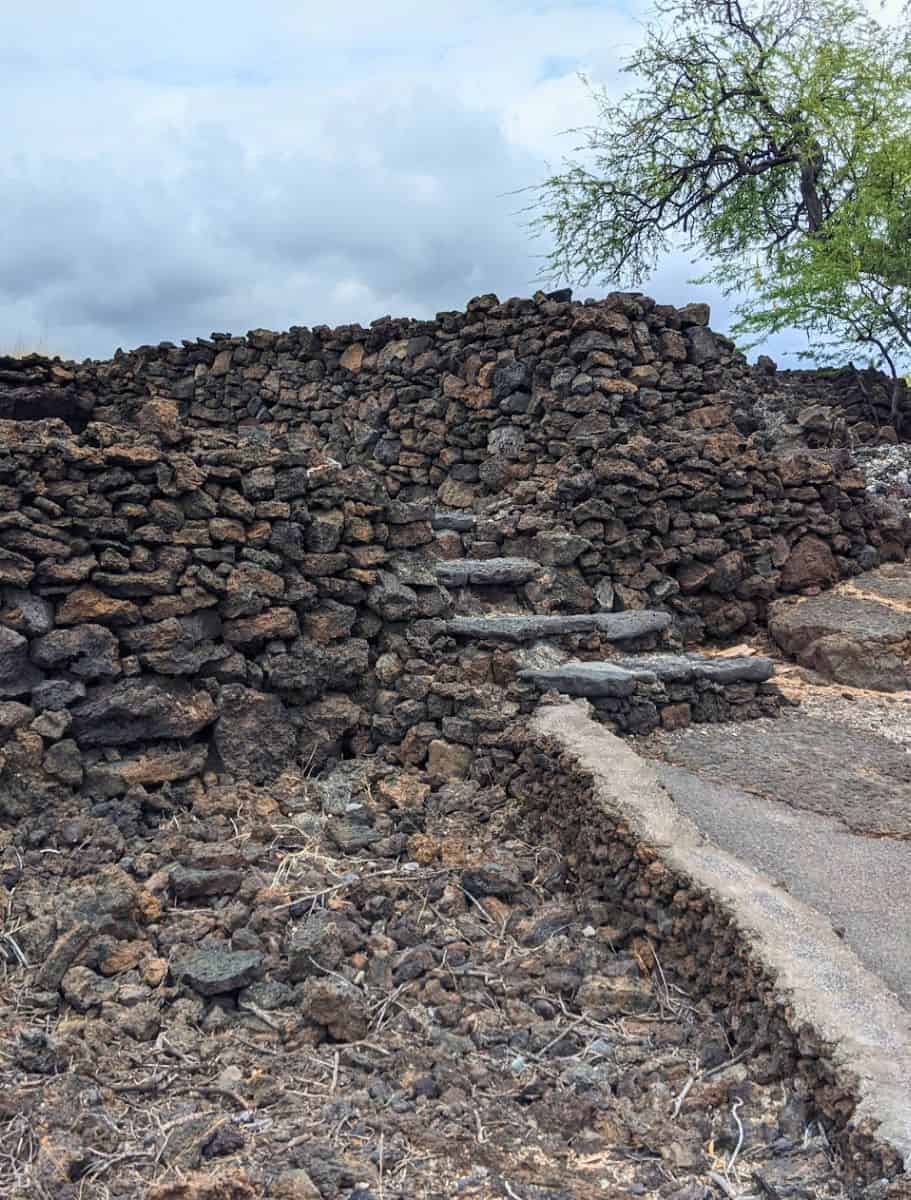
You’ll find many ancient Hawaiian historical structures and sites around the islands. Even if there isn’t a sign, don’t be climbing on rock walls and heiau platforms. It may just look like a pile of rocks, but they were carefully put there hundreds of years ago. You don’t want to destroy history.
Same goes with petroglyphs. Not all of them are marked so if you see one, don’t step on it or get your oily fingers on it. You want to preserve it for as long as possible.
30. Not Learn About Hawaiian History
How can you appreciate historical sites if you don’t learn about the stories behind them? If you don’t brush up on Hawaiian history before visiting, at least take the time to learn when visiting historical sites by either reading placards, watching informative videos, or taking a guided tour.
You’ll not regret it, I promise.
You Might Also Like:
Is There a Ferry from Oahu to the Big Island?
Is Hawaii a Country or a State?
30 Things Not to Do in Hawaii Final Thoughts
While I thought it would be hard for me to come up with 30 things not to do on your Hawaii vacation, I actually had to scale back! Didn’t want to overload you with information, you know?
Bottom line, just use common sense. If you are questioning whether you should do something, you probably shouldn’t. Or, ask a local.
Of course, there are many things you SHOULD do in Hawaii, but that’s a post for another time!